Architectural Glossary
#Architectural Styles
Colonial
#Béton Brut, or Brutalism
Béton brut also known as ‘raw concrete’ is a French term describing architectural concrete that is left unfinished after being cast. This type of concrete finishing retains the imprints from the formwork used during the pouring process.
‘Brutalism,’ the architectural style and movement from the mid-20th century, was derived from this term.
Dutch Colonial https://en.wikipedia.org/wiki/Dutch_Colonial_Revival_architecture
Federal
Georgian
Greek Revival
Queen Anne
#Parts of a building
#Clerstory
A clerestory is an architectural feature we use in the upper part of a building where the roofline is located. It consists of a row of windows placed above eye level allowing natural light or fresh air to enter the internal space. Clerestory windows are typically found in churches, cathedrals, or large public buildings. More about clerstory at Wikipedia
Bracket
allen-printworks allen-print-jh-2005-11-08.jpg
#Cornice
From the Italian word meaning “ledge”, a cornice is generally any horizontal decorative moulding that crowns a building — either along the roofline of a building’s face, over a door or window, or along the top of an interior wall. A projecting cornice on a building has the function of throwing rainwater off its walls. More about cornice at Wikipedia
#Dentil Cornice
From the Latin “dens,” meaning a tooth, a dentil is a small block used as a repeating ornament. In the case of a cornice, this element creates the visual effect of teeth. More about cornice at Wikipedia

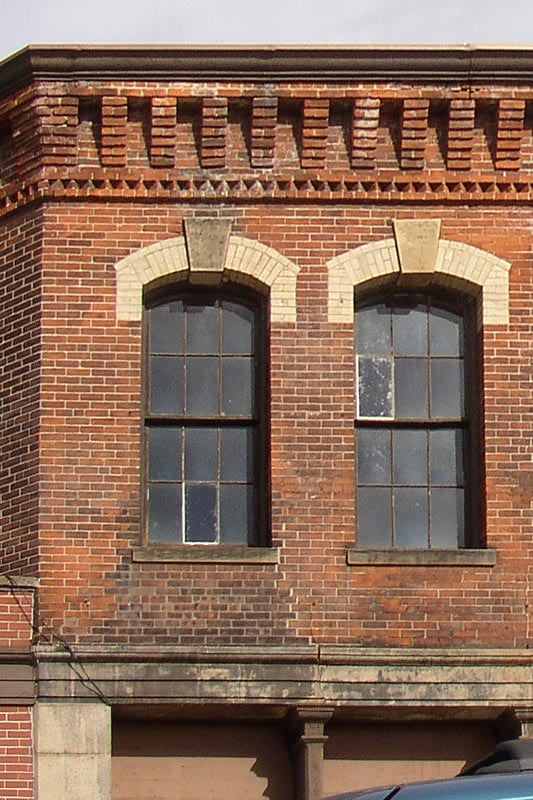
arnold-stable-pwt has a copper cornice with brackets
Cupola https://en.wikipedia.org/wiki/Cupola
brown-marvel-gym marvel-gym-jh-2001-03-04.jpg
Dormer https://en.wikipedia.org/wiki/Dormer
Egress This term in architecture refers to the act of leaving or exiting a building or space safely. It is used in relation to the crucial act of designing emergency escape/exit routes and related provisions for evacuating people in case of emergencies like fires, earthquakes, and other dangerous situations.
Façade Façade is a word we often use to reference the exterior face or front elevation of a building. It is usually a very striking and prominent part of a building that plays a vital role in defining its character and style.
#Fenestration
Fenestration includes openings like doors and windows in a building’s exterior. The design and arrangement of these openings impacts the building’s aesthetics, functionality, and energy performance. Strategic and careful planning of these openings allows for the effective use of natural lighting and ventilation, further enhancing the building’s overall environmental quality and energy efficiency.
#Lintel
Top of a window.
#Segmental Arch (lintel)
#Sill
campbell-machine-shop granite-sill.jpg
#Transom
segmental-arch-dentil-cornice.jpg with a keystone from /property/alexander-duncan-warehouse/
round-top-windows.jpg
Transom: alice-building-pvd alice-bldg-jh-2004-06-03.jpg
atlantic-jh-2003-08-08.jpg round top doorway
Finial A finial also known as hip-knob, is a pointed decoration or ornament found on the tops or ends of architectural elements like gables, pinnacles, canopies, and spires. They range from very simplistic designs to extremely intricate ones featuring motifs like flowers and animals. Due to their prominent position, finials are often crafted from durable materials to endure exposure to different weather conditions.
Gable https://en.wikipedia.org/wiki/Gable
https://en.wikipedia.org/wiki/Dutch_gable
Stepped Gable
Hyphen You may be familiar with the ‘hyphen (-),’ a punctuation mark used to join two words. Well, in architecture it has a similar purpose, it is a structure that connects two parts of a building. It can take the form of covered walkways, hallways, bridges, or tunnels. Hyphens can help us create interesting circulation paths for users, sometimes giving them views to the outside.
Jetty Jettying was the technique of extending floor space in the upper storeys of a building beyond its established ground floor walls by creating an overhang with the help of timber beams. A jetty can typically be seen in traditional Tudor houses.
Pilotis Pilotis are vertical columns that support a building, elevating it above ground level and creating an open space or void underneath that can be used for various purposes. They help free the building from load-bearing walls, allowing for flexible and open floor plans. This concept was popularised by Swiss French architect Le Corbusier during the Modernist movement in the early 20th century.
Quoins A quoin is basically a corner with decorative elements. It consists of a pattern of rectangular blocks that are bound to catch the eye as they contrast with the colour and texture of the wall. Quoins can be made of materials like brick, stone, concrete or stucco. Originally, quoining was used to provide structural stability to a building’s corners but over time it evolved into a design feature.
#Roof Styles
#Double Hip
382-brook-116-waterman 116-waterman-383-brook-jh-2023-02-02.jpg
#Mansard Roof
A mansard is a multi-sided gambrel-style hip roof characterized by two slopes on each of its sides, with the lower slope at a steeper angle than the upper, and often punctured by dormer windows. The steep roofline and windows allow for additional floors of habitable space (a garret). French-inspired architecture and the Queen Anne style often feature this roof design. More about cornice at Wikipedia

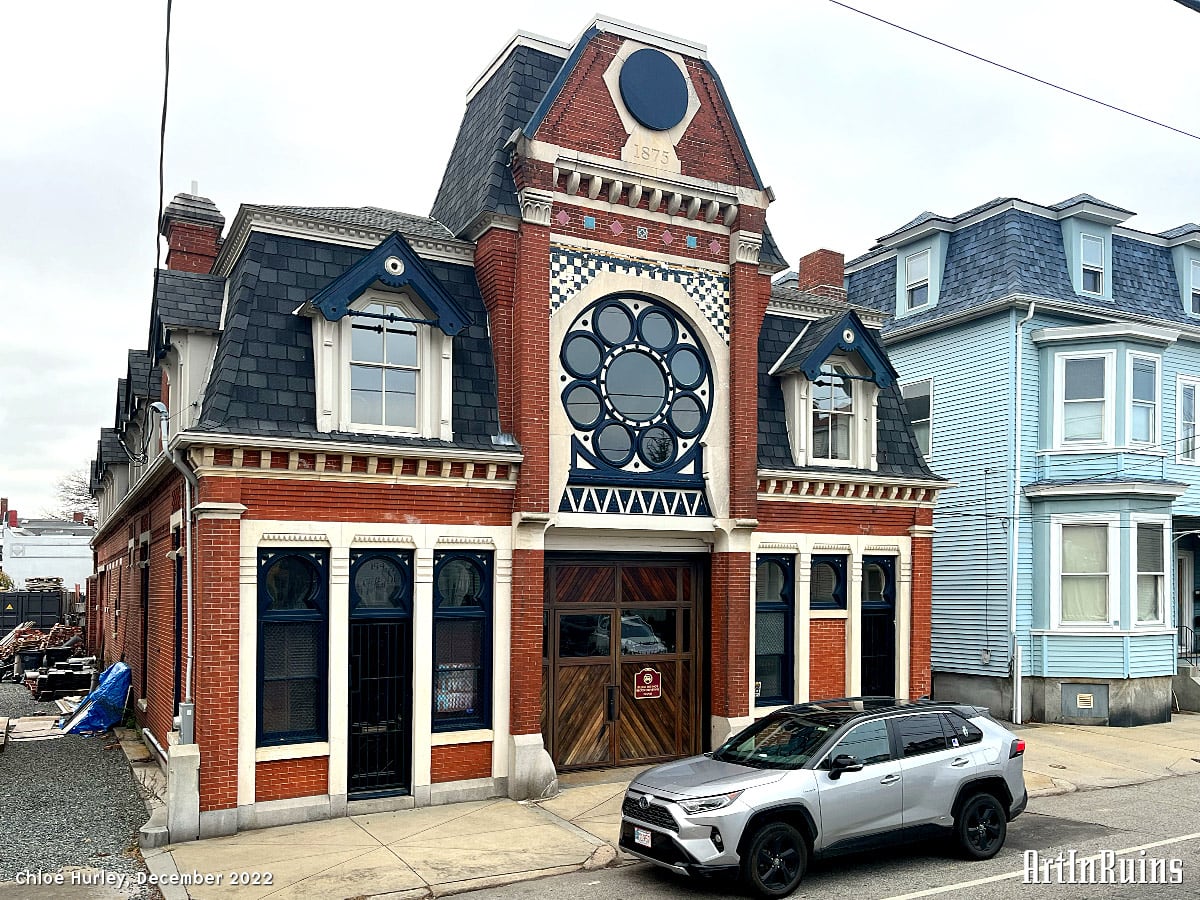

Stringcourse A visible division between floors on the exterior of s building.
Stucco Stucco is a type of plaster traditionally made from a mixture of cement, lime, sand, and water. It is a popular material in building construction and is used to coat surfaces like walls and ceilings. It offers various finishes which makes it quite versatile. It is fire resistant, durable, and needs minimal maintenance.
Turret Turrets are small tower features attached to buildings like castles and fortifications. They are typically circular in shape. Despite not being as popular in modern construction, they still remain an iconic architectural feature.