William A. and Ami Kuan Danoff Life Sciences Laboratories
Brown University builds a +300,000 square foot life sciences laboratory in the center of the Jewelry District
images of this Property
-
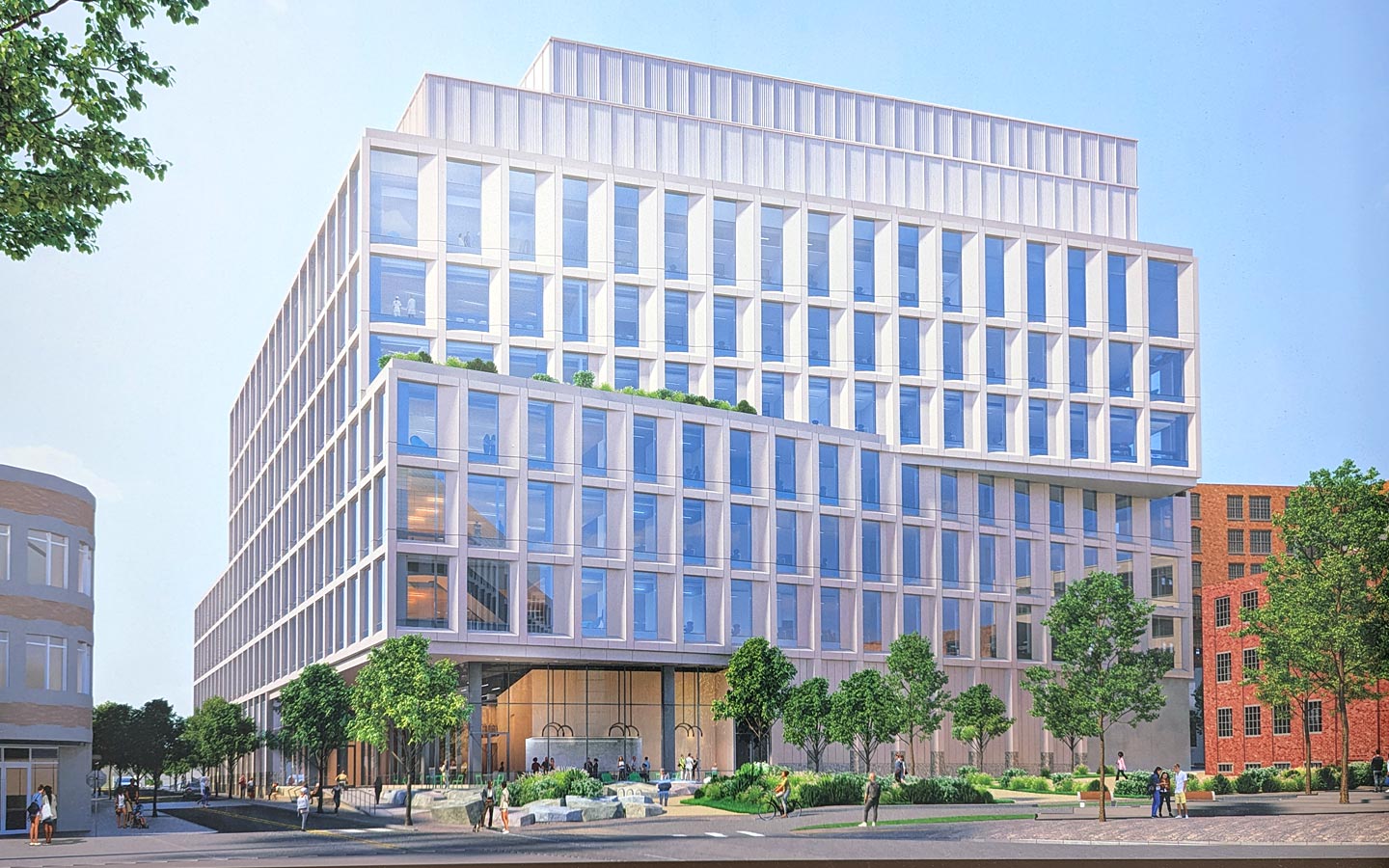
Rendering for promotional materials by TenBerke -
-
-
-
![]()
-
![]()
-
![]()
-
![]()
-
![]()
-
![]()
-
![]()
-
![]()
-
![]()
-
![]()
-
![]()
-
![]()
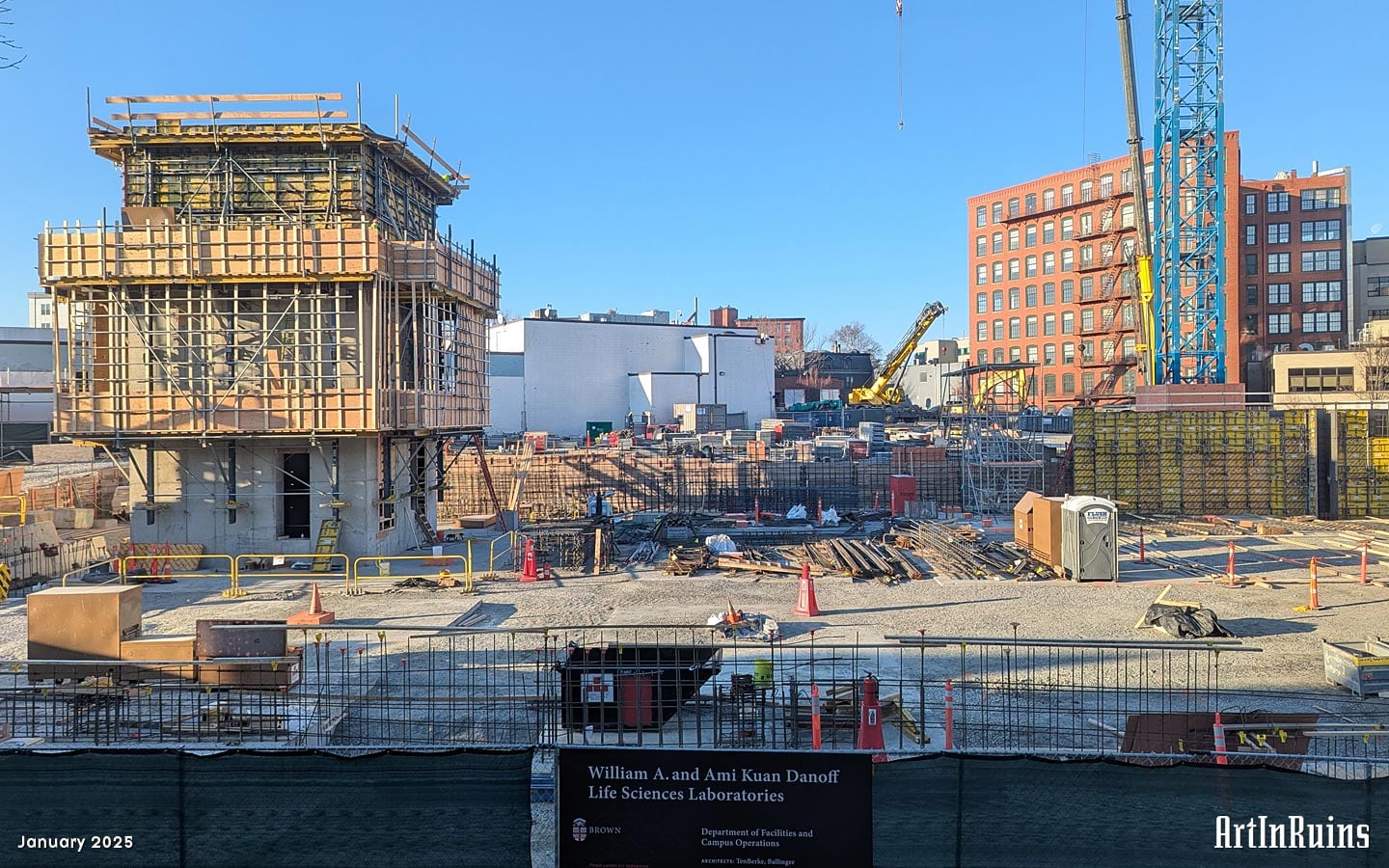
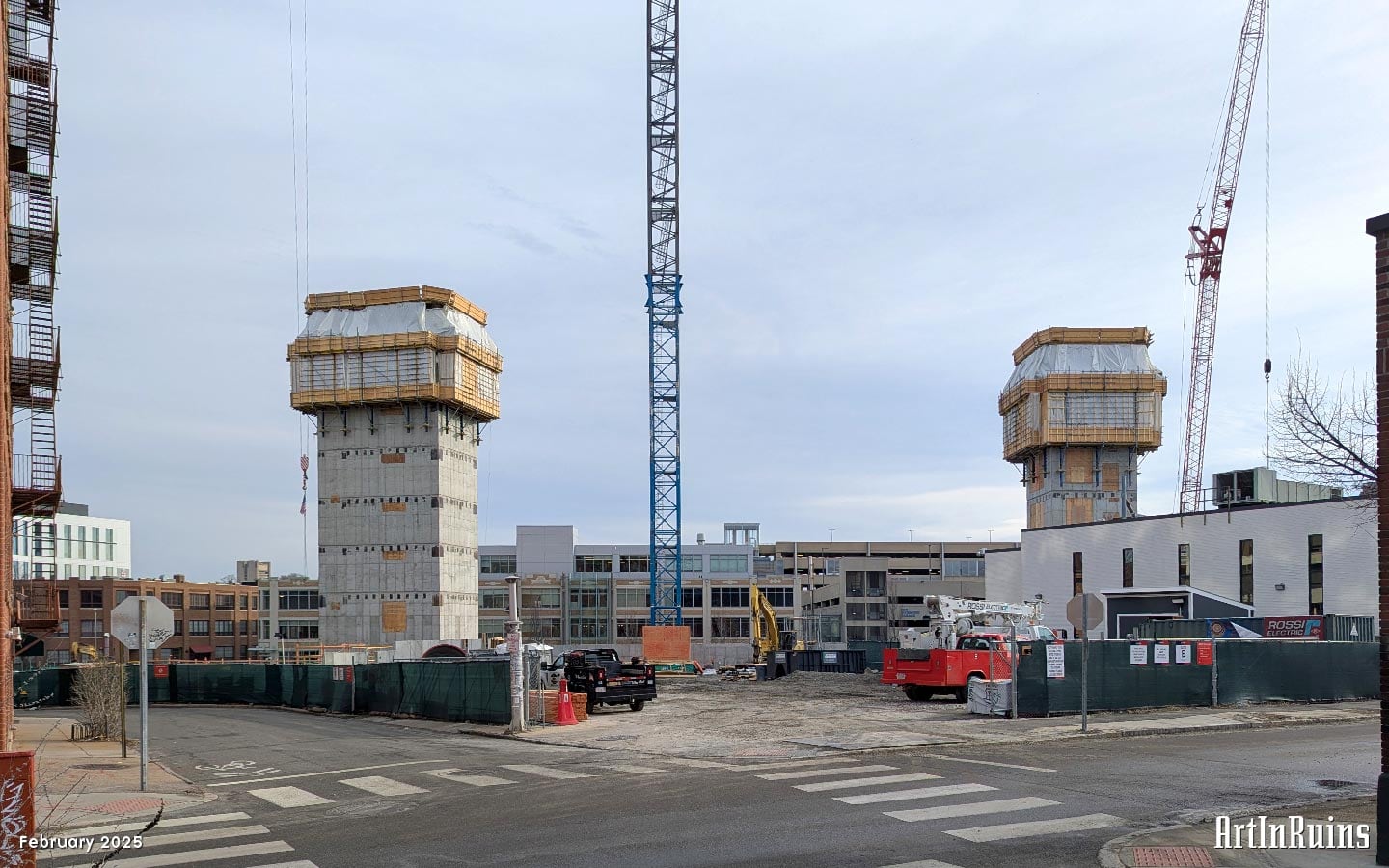
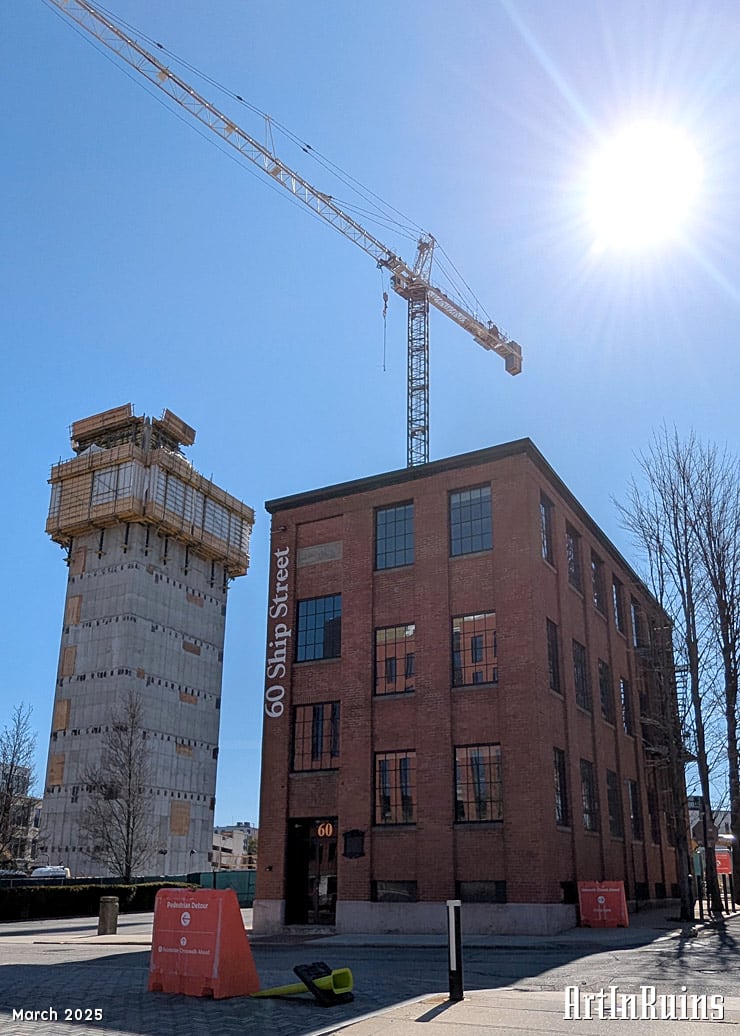
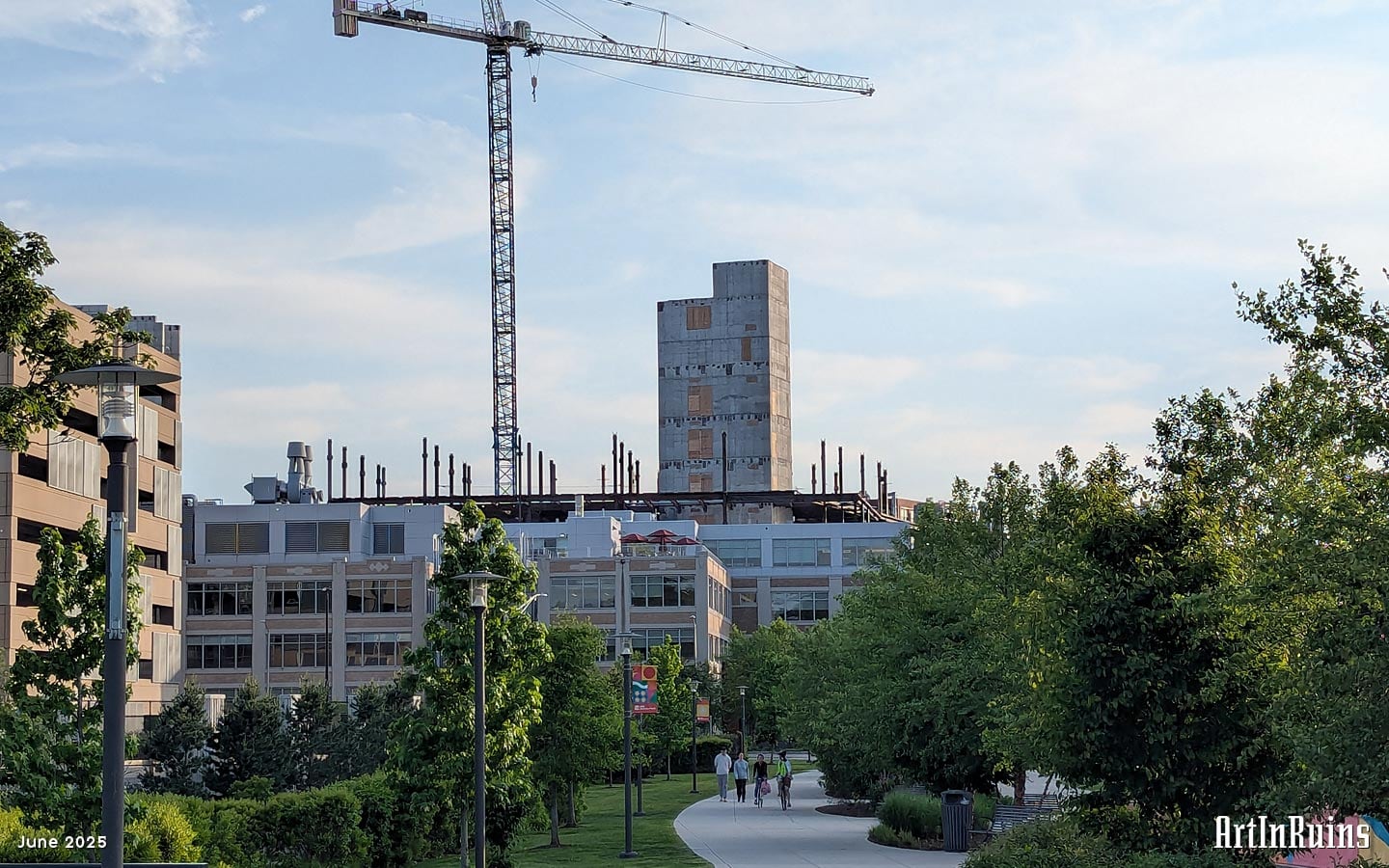
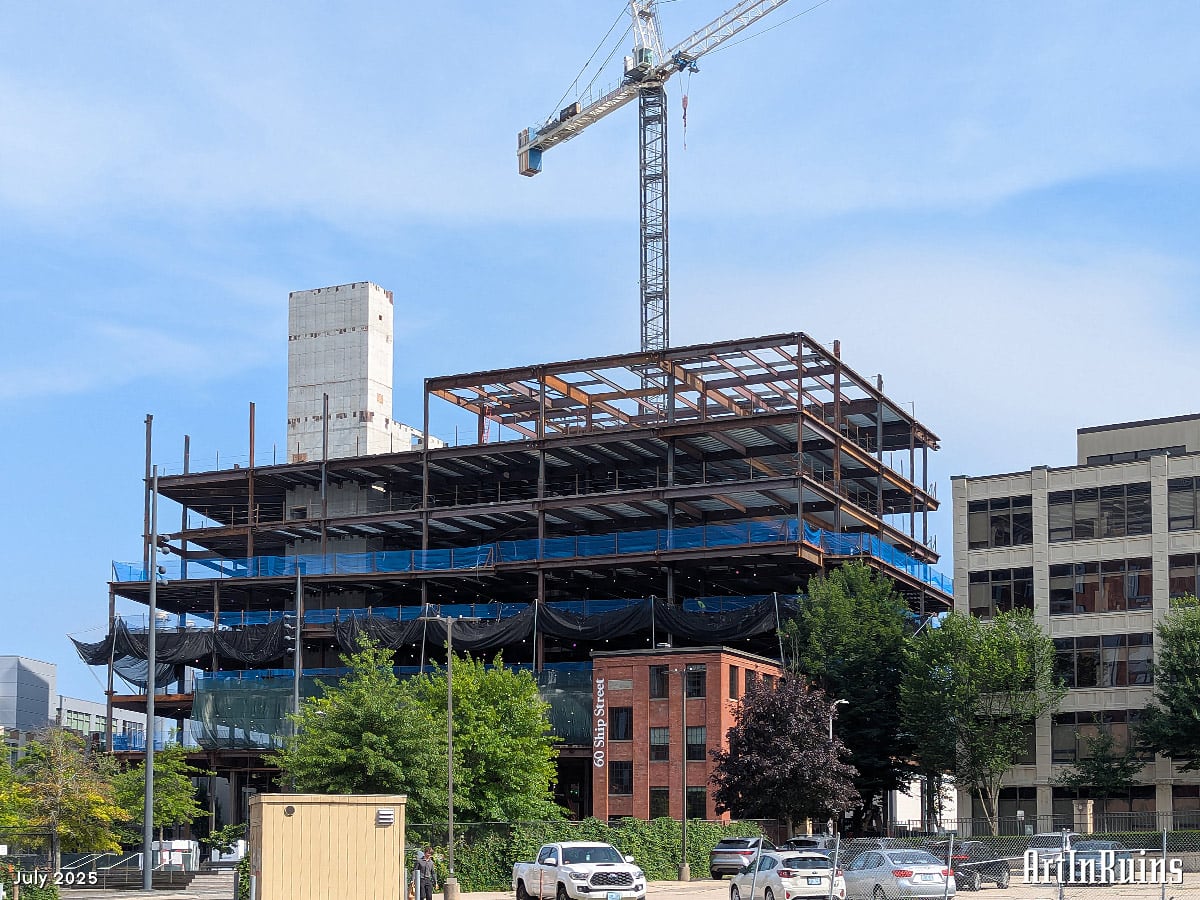
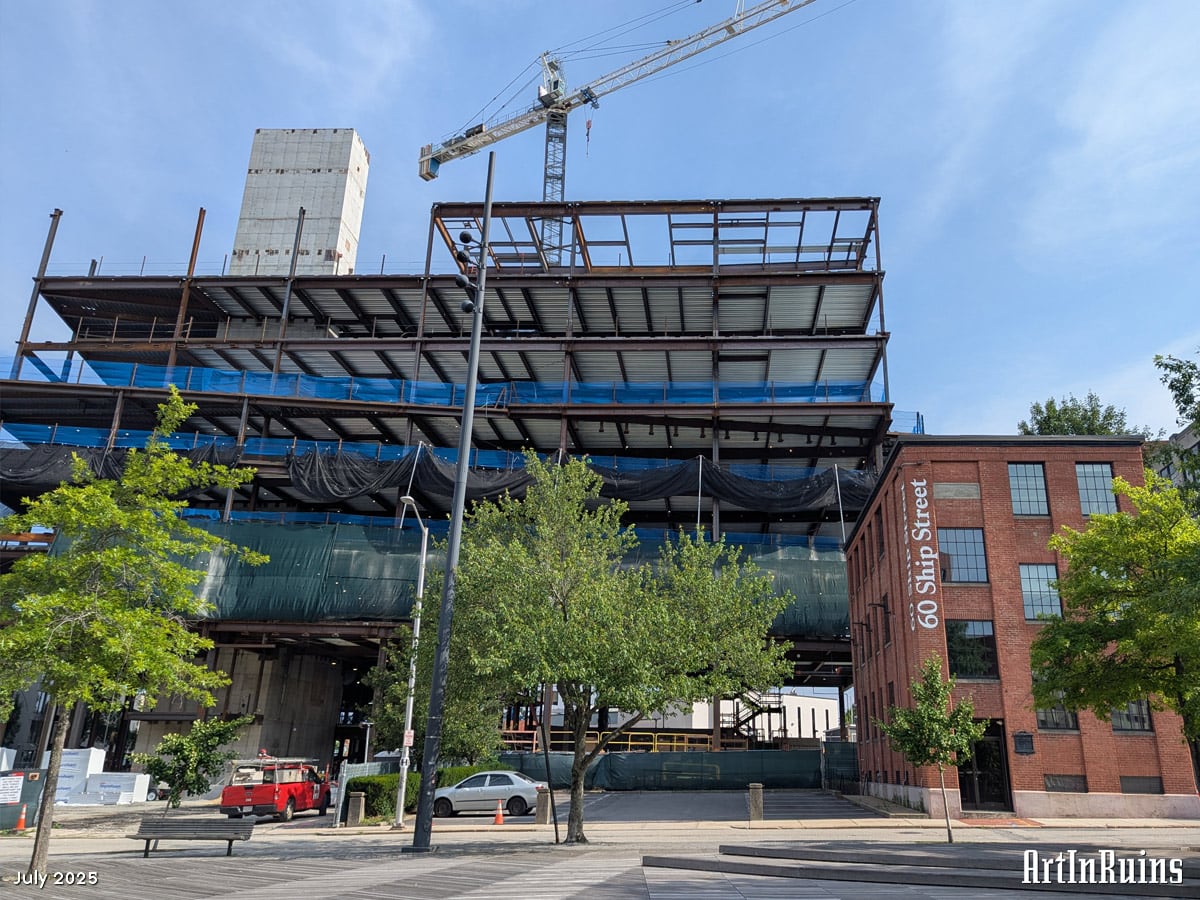
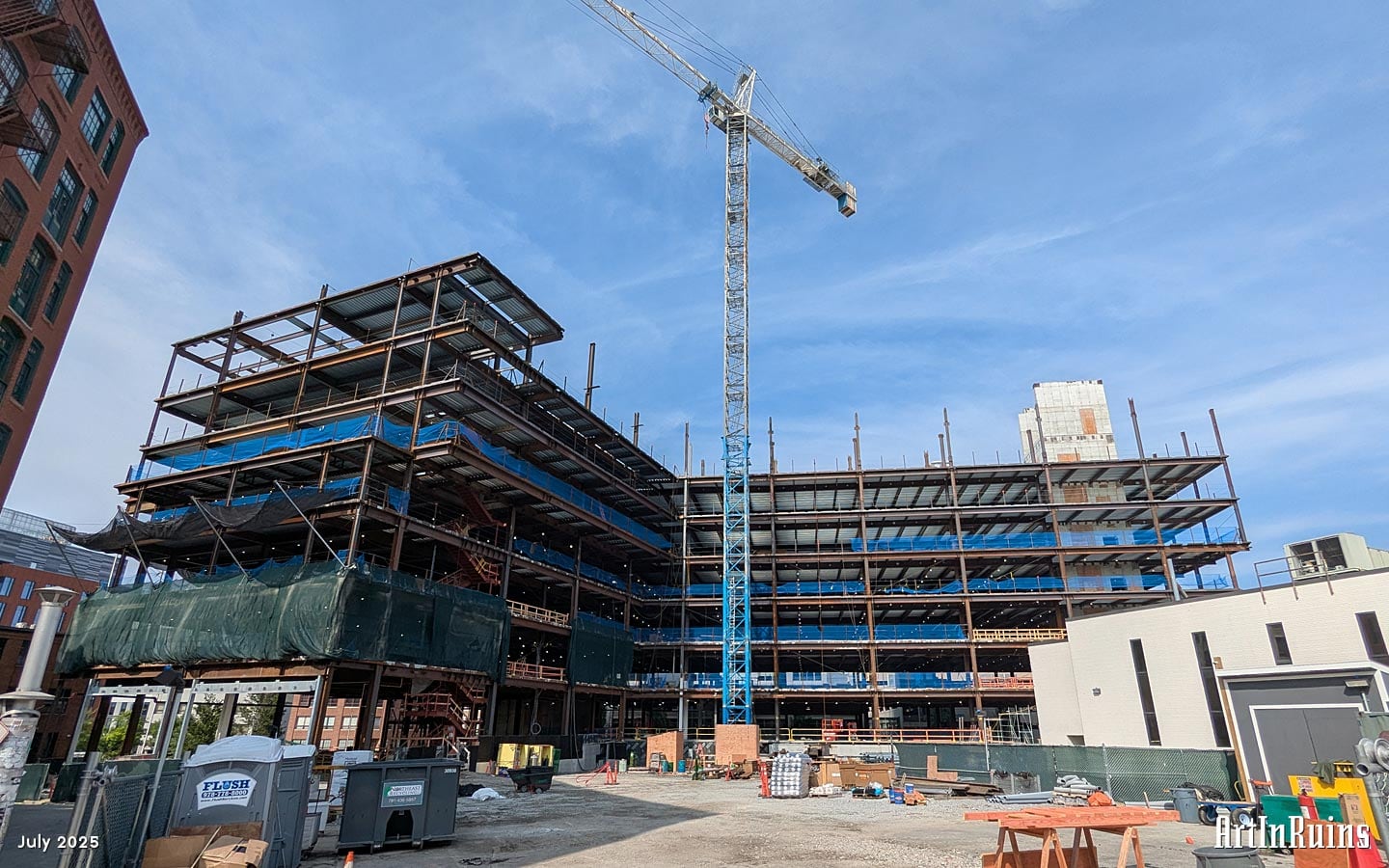
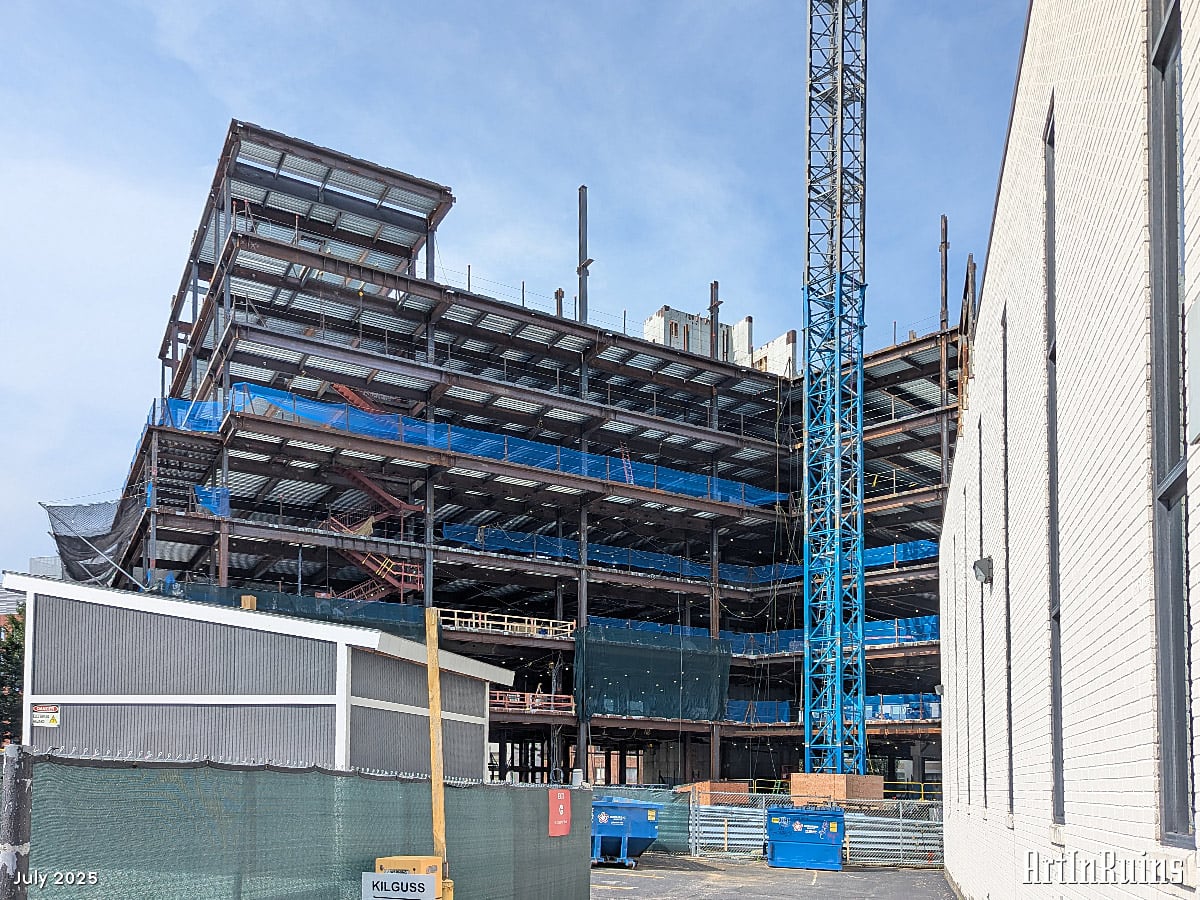
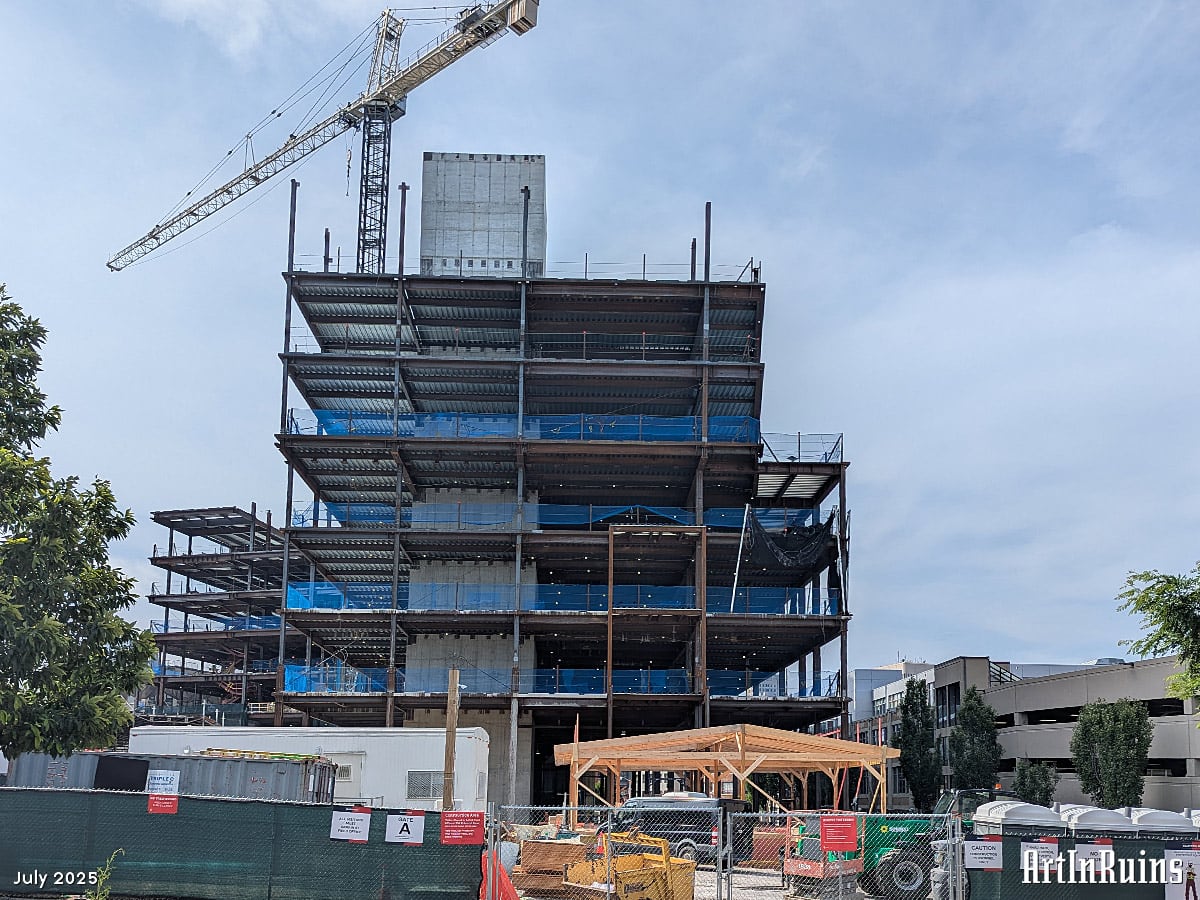
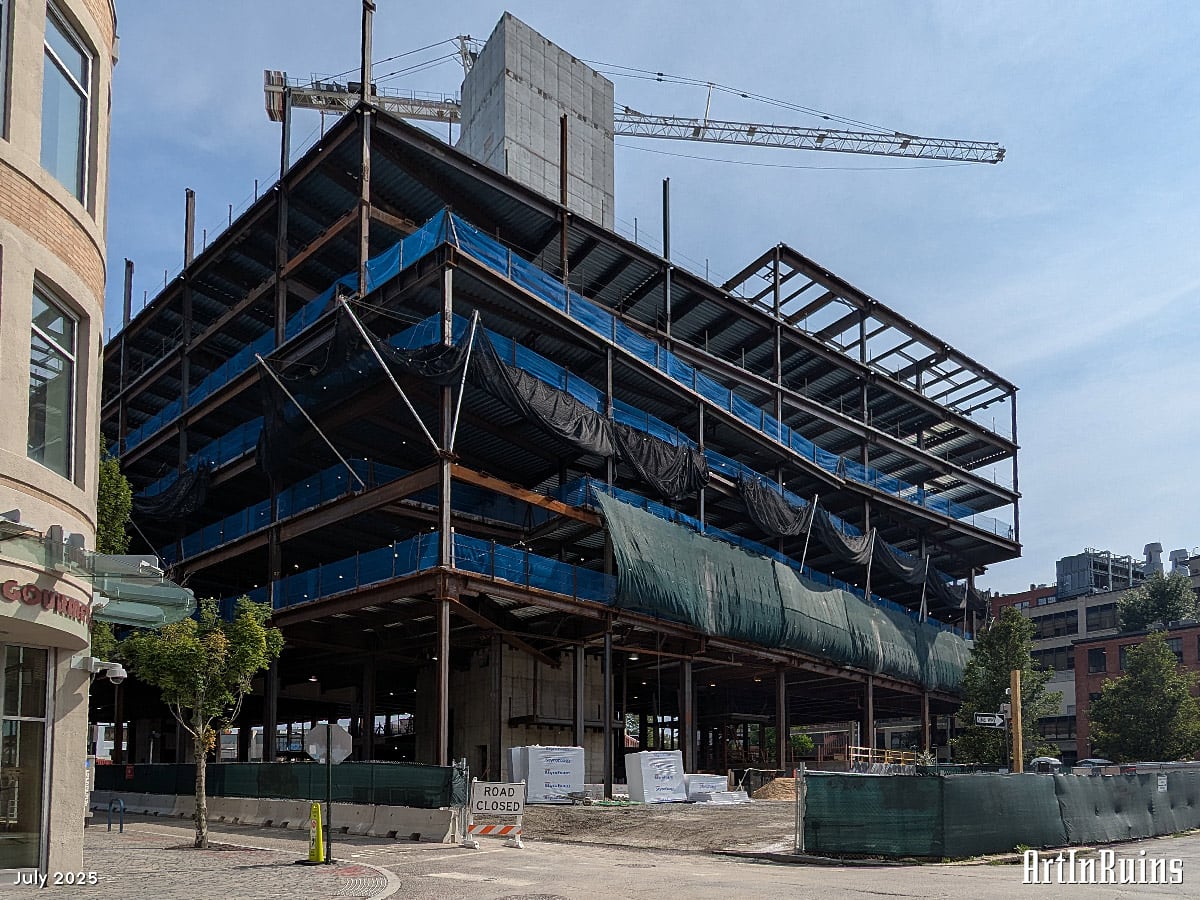
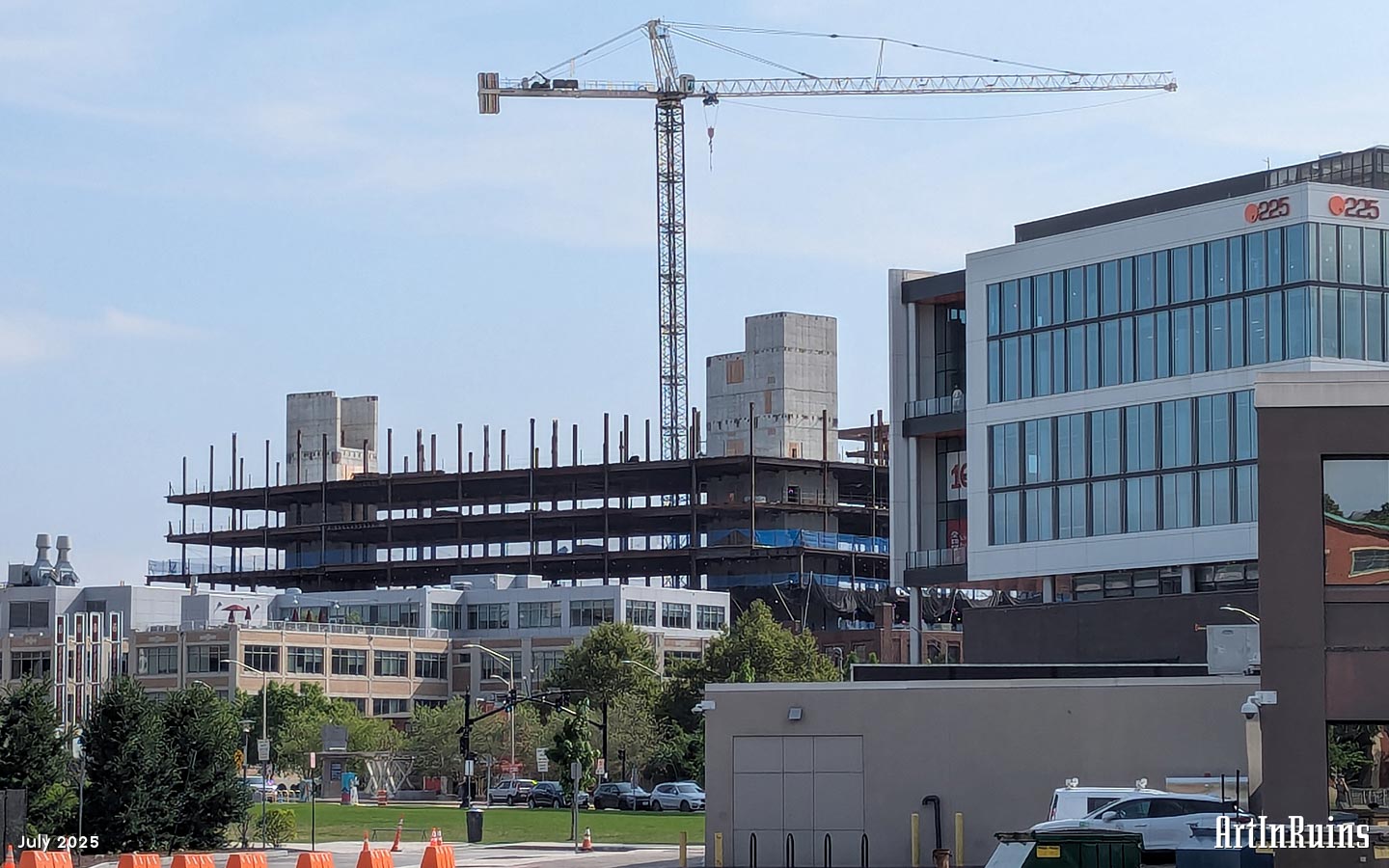
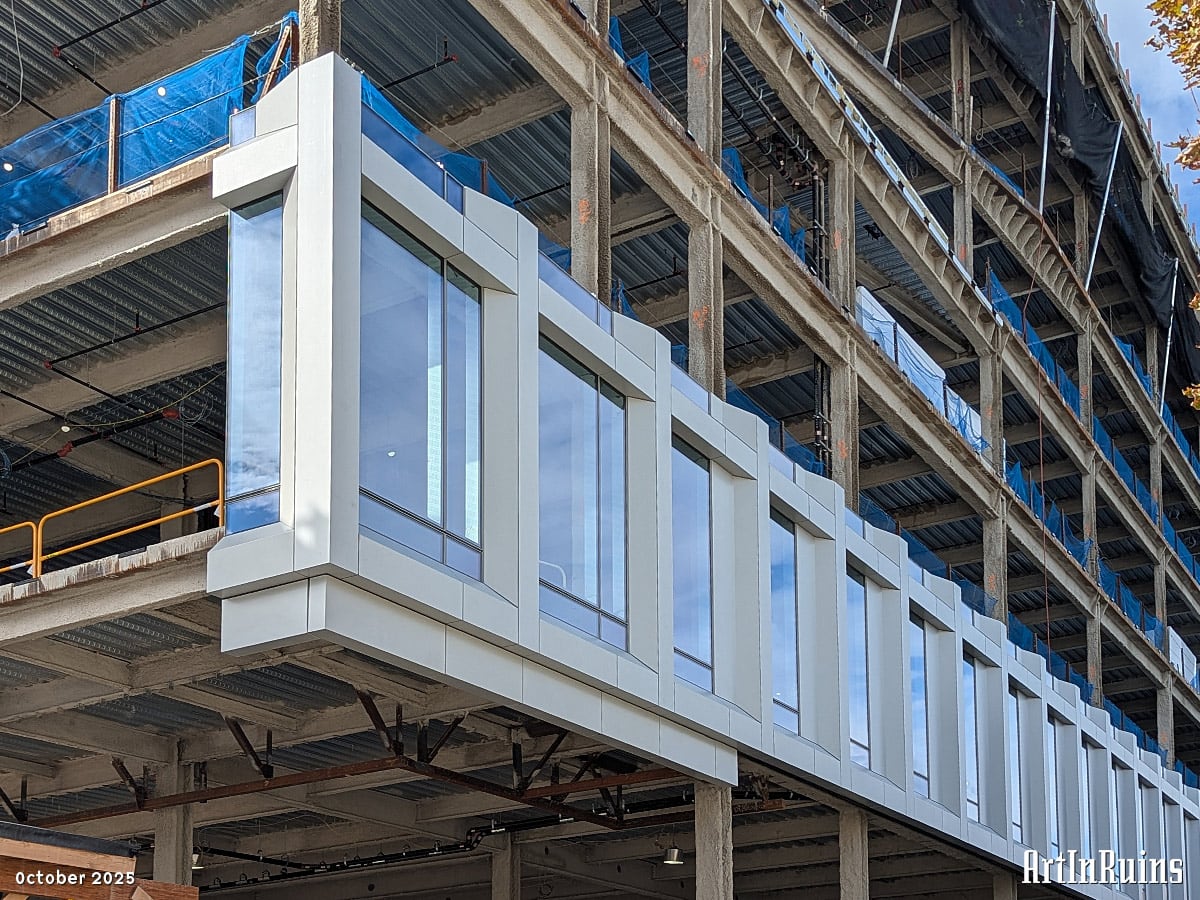
The exterior panels start to get added, and it is interesting to see how they fit together
16 images: Press to view larger or scroll sideways to see more.
About this Property
Proposal
Brown University’s expansion into the Jewelry District for the construction of this building started in 2022 when the University purchased 233 and 261 Richmond Street from “financially distressed” Care New England group.1 Those two buildings were demolished in 2024 to make way for this new structure that occupies most of the block bounded by Richmond, Ship, Elbow, Chestnut, and Elm Streets.
200 Chestnut Street was also purchased by Brown in the same timeframe though that building remains on the block, along with 60 Ship Street, the only building Brown does not own.
Brown proposed a new integrated life sciences center as part of its 10-year strategic plan starting in 2014. The facility provides state-of-the-art laboratory space for researchers to work together on pressing health-related issues. The Jewelry District location offers collaborative proximity to Brown’s Warren Alpert Medical School, the School of Public Health, the School of Engineering, and the University’s affiliated hospital partners (formerly Lifespan).
In June of 2022, the selection process for architectural team began2 and the team was selected by December. In September of 2023, the architectural plans were approved by the City Plan Commission.3
According to recent press releases and the informational placards at the construction site, the building will be seven stories and provide 324,000 square feet of labs and workspace for research in aging, immunity, brain science, cancer, and biomedical engineering. The all-electric 100% renewable-powered lab will be a first for the University and one of the first “net zero” medical labs in New England. Danoff Laboratories will be the largest academic lab facility in Rhode Island and will include embedded entrepreneurs for commercial start-up incubation.
An over-street bridge is planned to connect Danoff Laboratories with the adjacent Molecular Medicine building, formerly the Doran-Speidel building (built 1912). The first floor will include a Human Subject Research Space for clinical trials and patient-based research. And finally, it will support the state’s first Biological Safety Level 3 (BSL-3) certification.
Design Reception
Deborah Berke Partners (now named TenBerke), a New York City-based practice, and Ballinger, a Philadelphia-based team of architects, engineers, planners and designers, worked in partnership on the design and engineering. Both were selected after a review process culled a long list of applicants down to fourteen and then four and then the final team.4
TenBerke recently worked with the University on its Brook Street Residence Halls and Ballinger has expertise designing research labs, including previously working on Brown’s Sidney E. Frank Hall for the Life Sciences.5
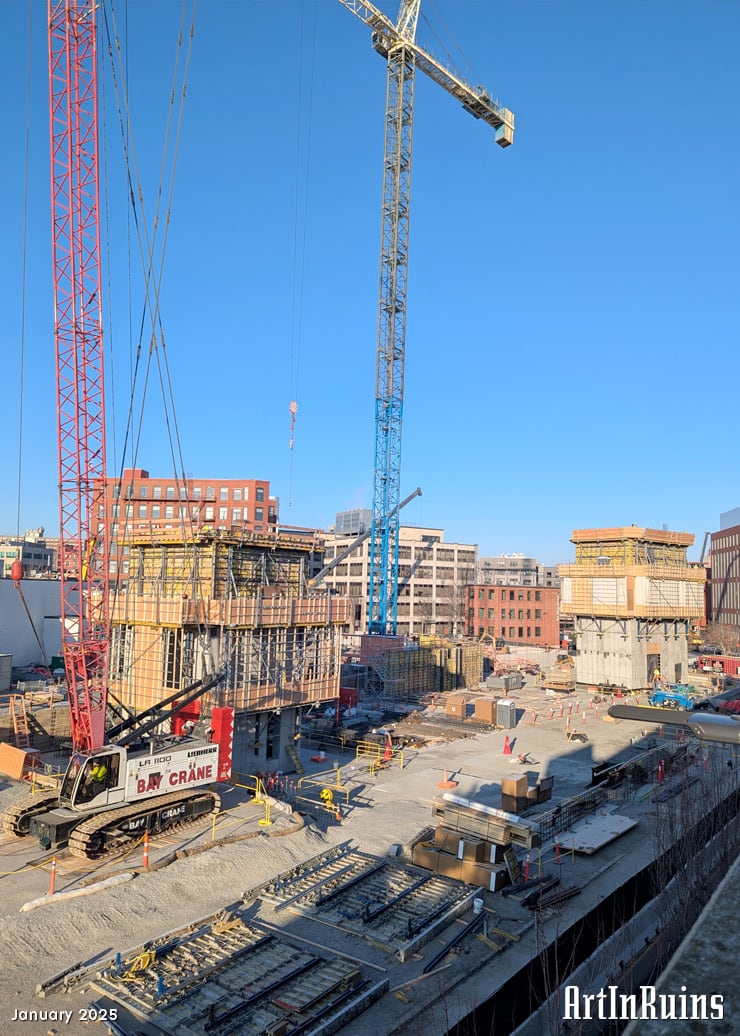
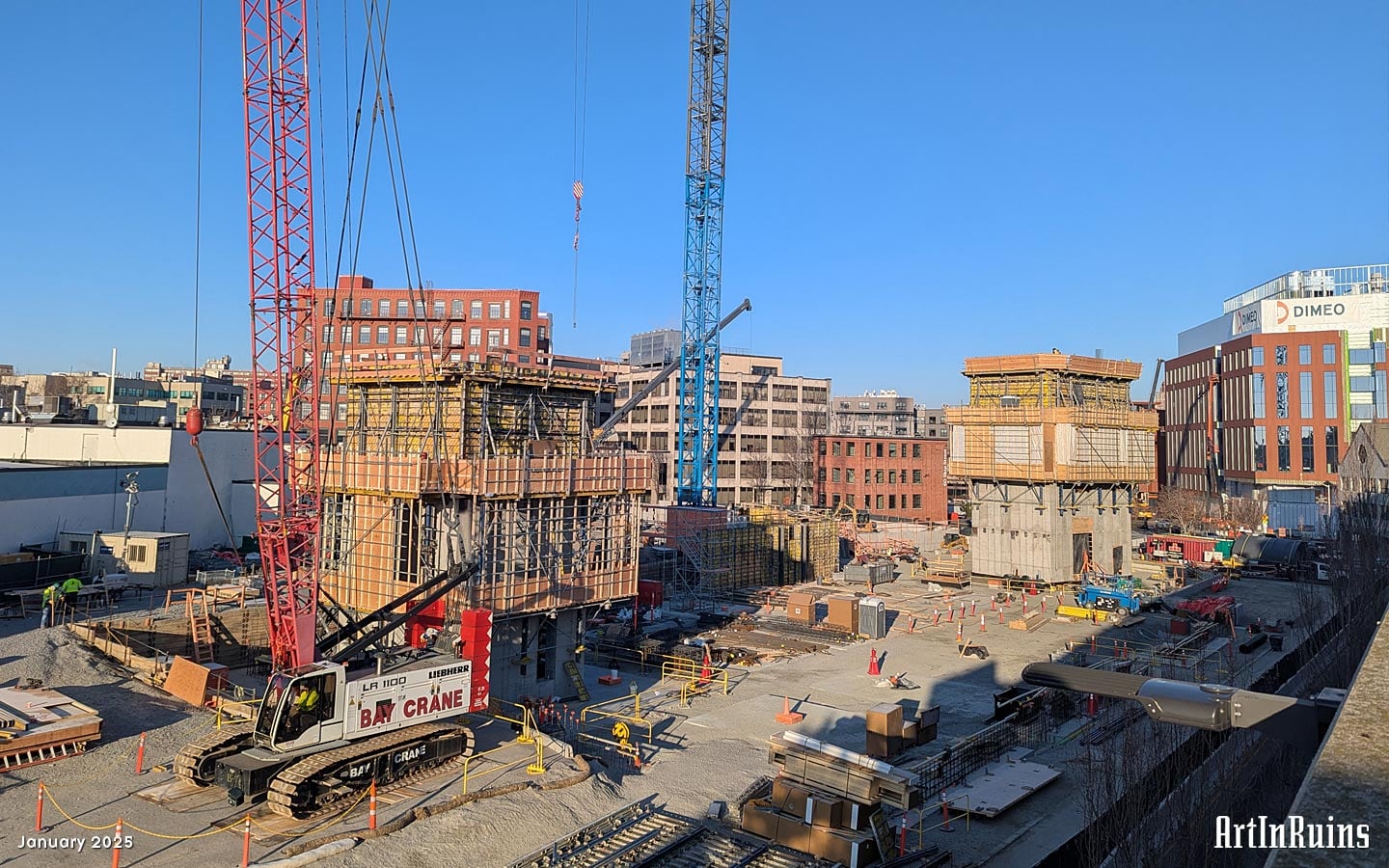
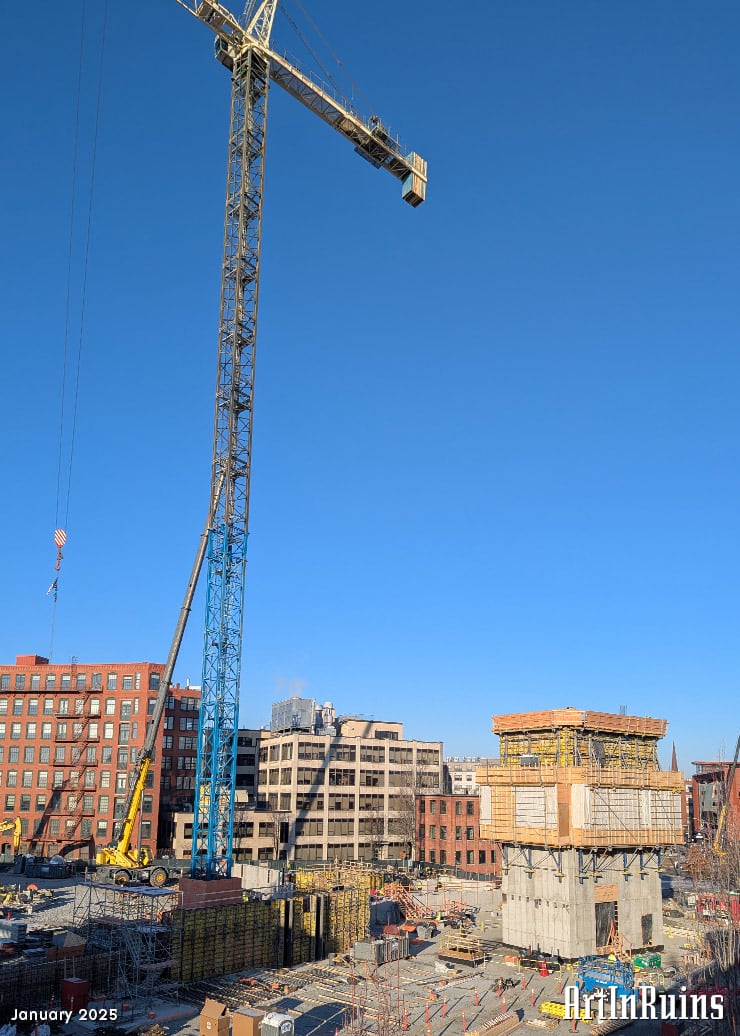
As a sheer mass, the building as it is being constructed feels gigantic. It really changes the way this portion of the Jewelry District is perceived. The recent construction in the area has also been relatively large, but their footprints have not been as large as this. For comparison, 225 Dyer Street built in 2019 is seven stories, 100 feet tall, and 196,000 square feet; the Rhode Island State Health lab built in 2023 is also seven stories, 130 feet tall, and provides 208,000 square feet. This new building for Brown is slightly shorter at 121 feet tall (not including the mechanicals on the roof) but provides over 324,000 square feet of space.

At seven stories, it will dominate its nearest neighbors — The Little Nemo building, 200 Chestnut Street, 60 Ship Street, and even the five-story Doran-Speidel building. The first floor will feel very open in contrast to the mass above, with 18 foot ceilings on the shorter side of the building and 30 foot ceilings on the other side due to the change in street elevation.
From above, the building is two masses intersecting at a point, creating a obtuse “inner elbow” open space on the southern side and an “outer elbow” on the northern side. Green space will be provided on the south, west, and northern sides while the eastern side along Richmond is built up to the street.
The design aesthetic is a heavy grid of open windows with wider windows on the corners and narrower windows in the middle. The seven story mass is split into two sections like a Rubik’s cube that has been twisted — the top three floors are rotated slightly from the bottom four.
It is difficult to pass judgement on the aesthetics of the building so far, as renderings are always an idealistic interpretation of the final design. For now, we will comment only on how the size pushes the limits of the approachability of the neighborhood and its relatively small but industrial collection of historic structures.
We would be remiss not to mention the potential for job creation and an increase in student rentals for the rest of the Jewelry District, which has already seen a dramatic uptick in rentable living space. While the neighborhood-feel may change, we hope that everyone who lives and works in the area feels as though we got a more vibrant and dense incubator for job creation and medical innovation in trade.
-
GoLocal Business Team. “Brown Spends $16M on 4 Buildings in the Jewelry District, Nearly $100M Buying Spree in 18 Months.” GoLocalProv, 01 July 2022. Accessed 03 August 2025 from https://www.golocalprov.com/business/Brown-Spends-16M-on-4-Buildings-in-the-Jewelry-District-Nearly-100M ↩
-
Clarke, Brian E. “Brown plans new integrated life sciences building in Providence’s Jewelry District.” Brown University (Press Release), 28 June 2022. Accessed 03 August 2025 from https://www.brown.edu/news/2022-06-28/ilsb ↩
-
Clarke, Brian E. “City approval enables Brown to proceed with life sciences building, athletics practice facility.” Brown University (Press Release), 20 September 2023. Accessed 03 August 2025 from https://www.brown.edu/news/2023-09-20/cpc ↩
-
Pikul, Corrie. “Two accomplished architecture firms selected for Brown’s planned integrated life sciences building.” Brown University (Press Release), 17 October 2022. Accessed 03 August 2025 from https://www.brown.edu/news/2022-10-17/ilsb-architects ↩
-
Ibid. ↩