Kingston Station Signal Tower 133+
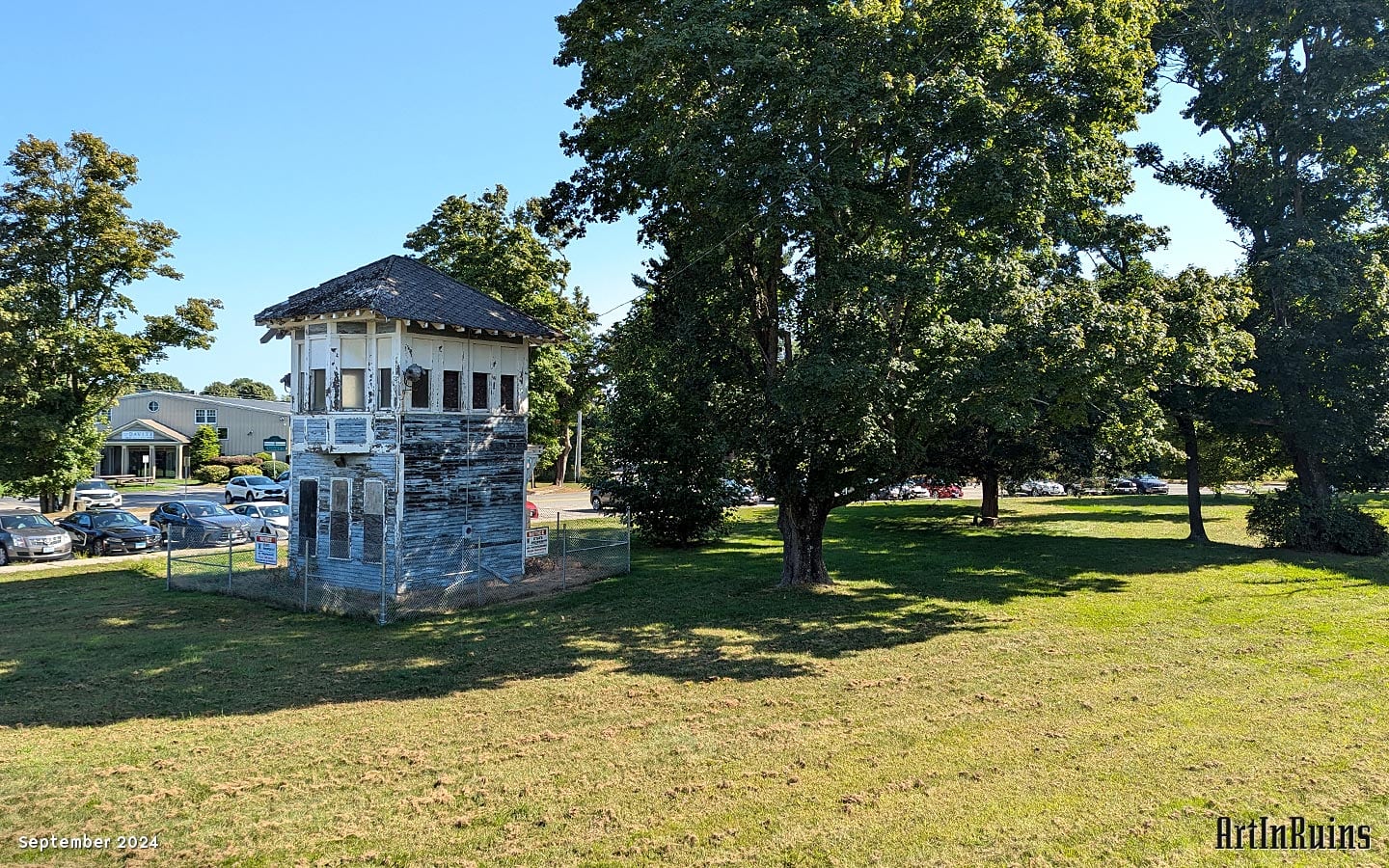
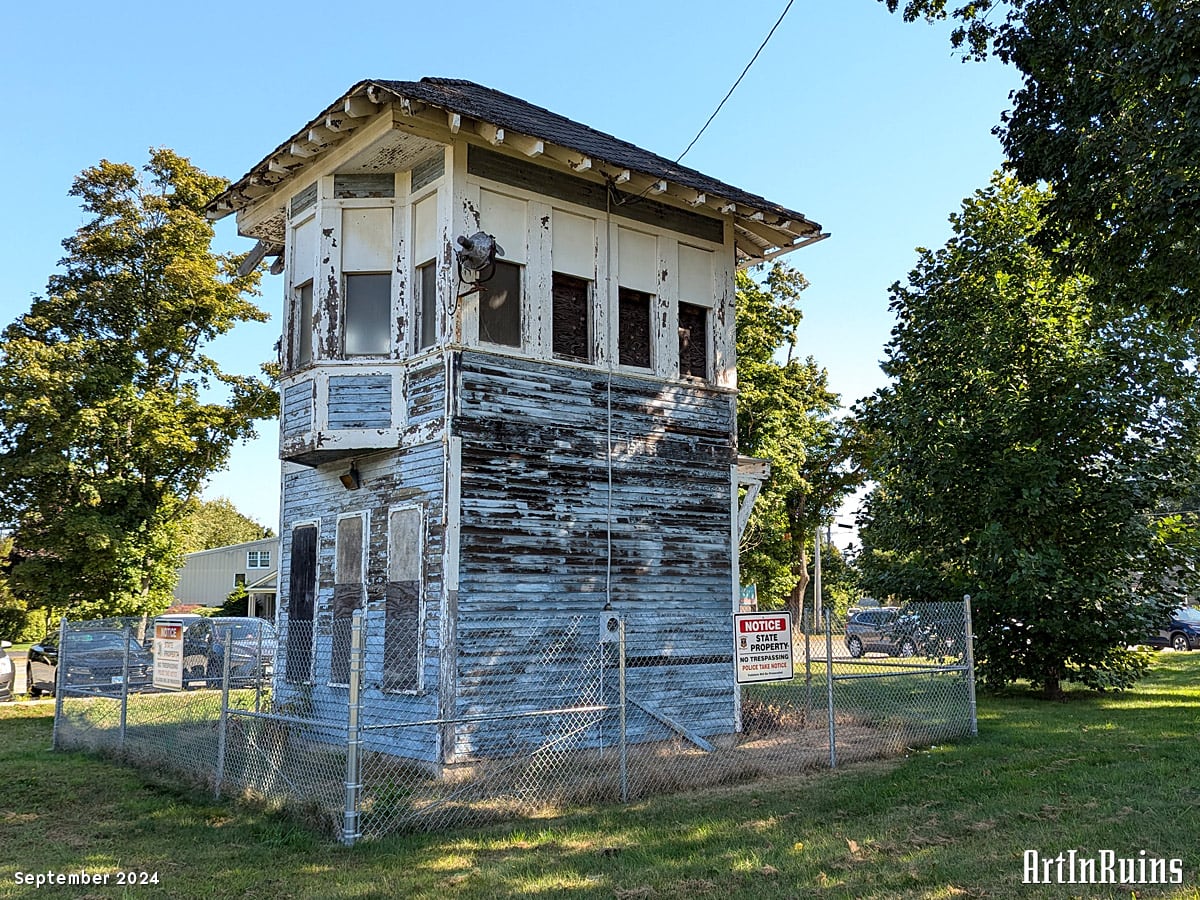
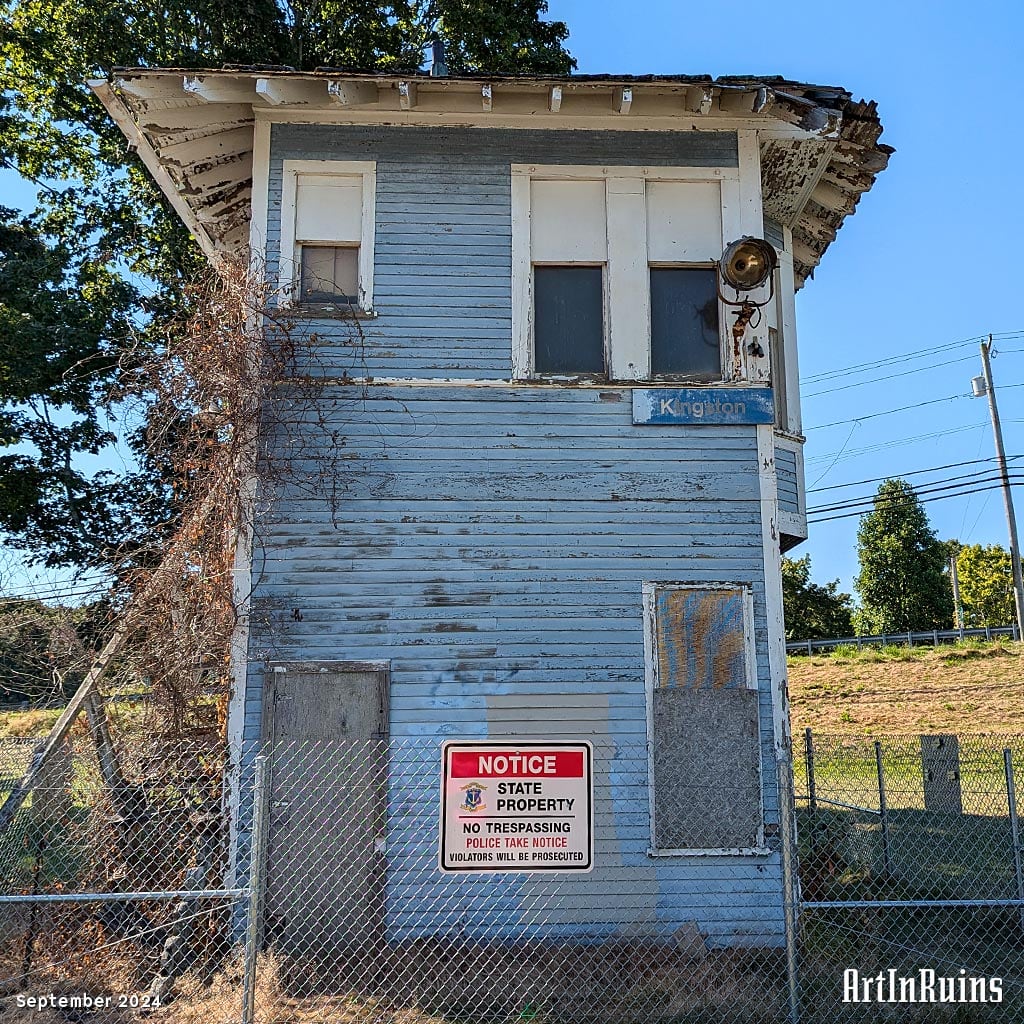
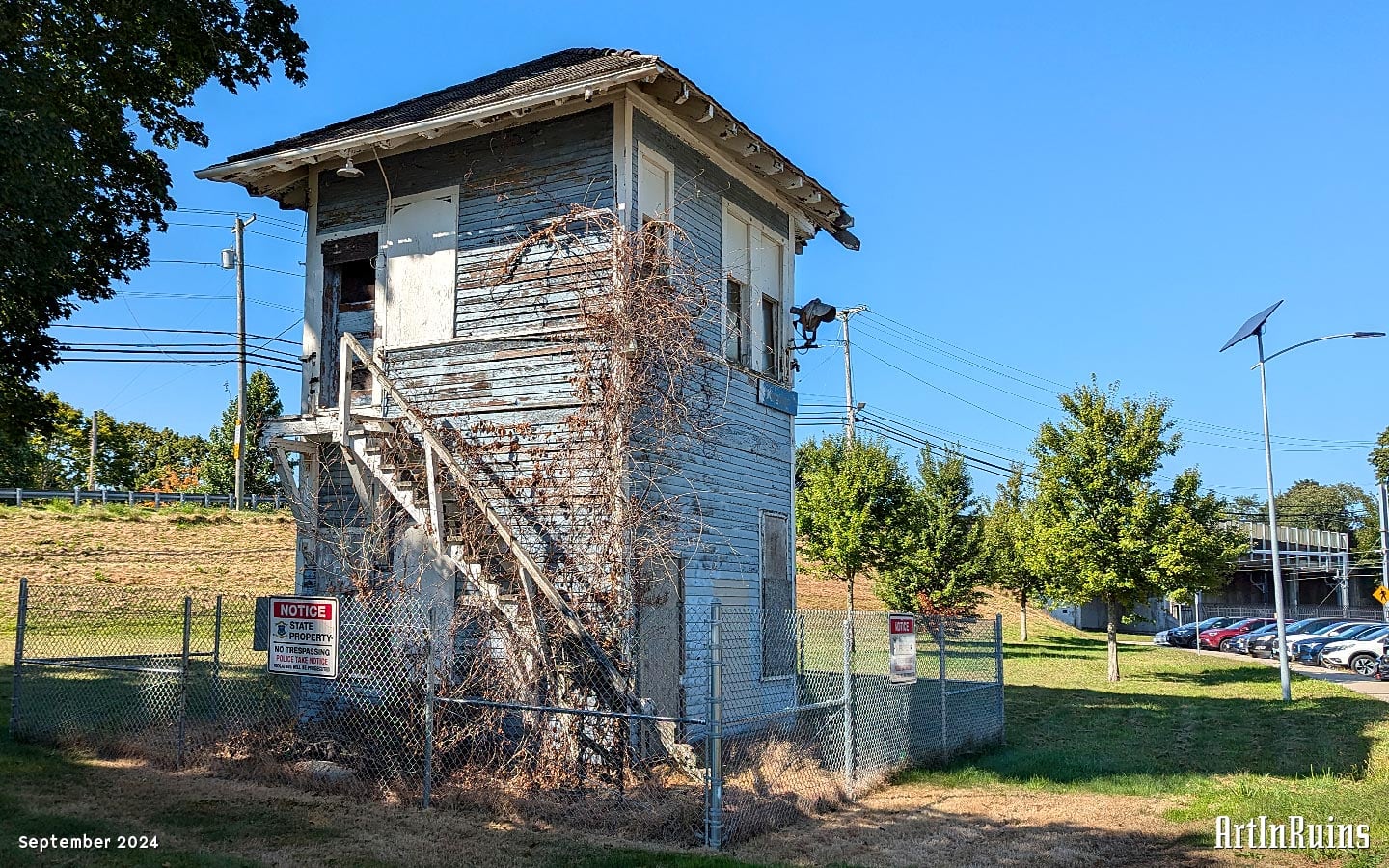
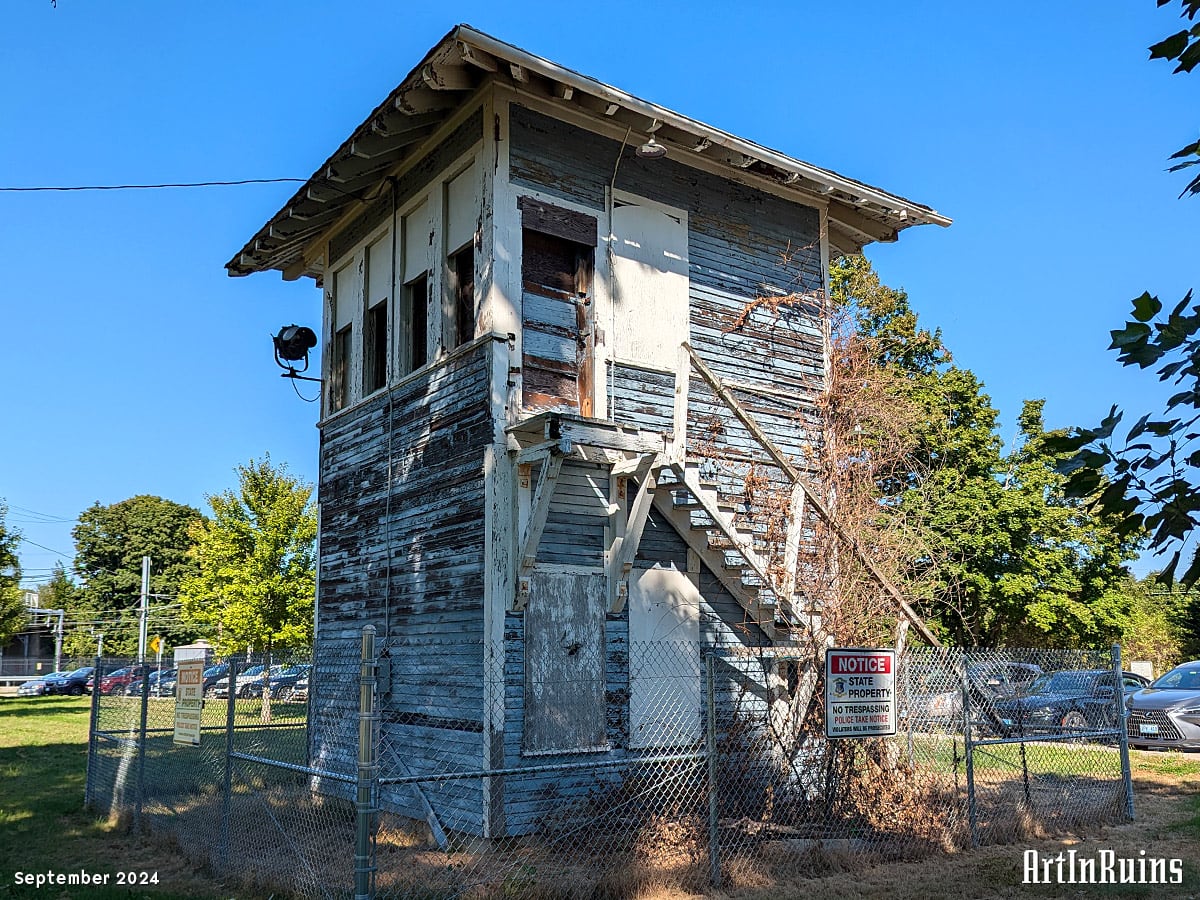
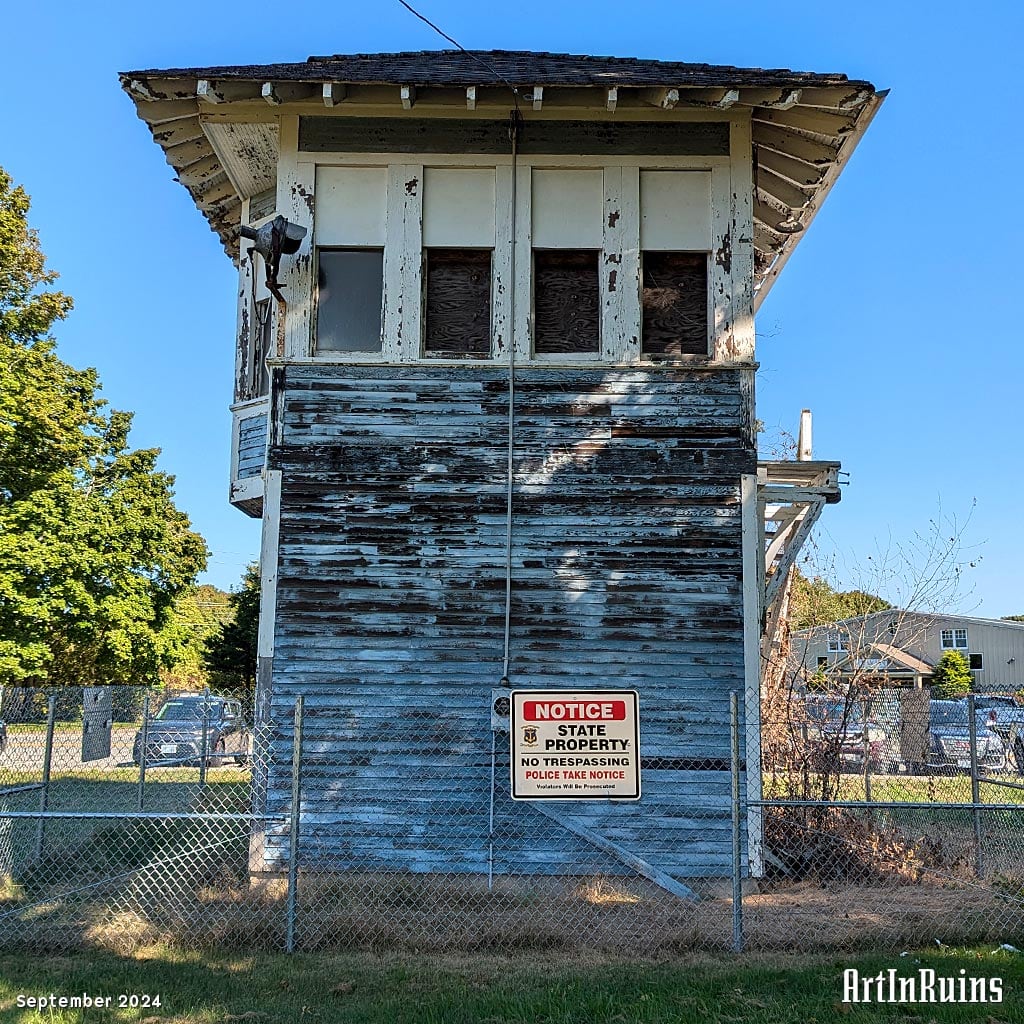
A small, narrow two-story tower once used to switch trains between tracks has been sitting vacant and deteriorating for almost 40 years
images of this Property

9 images: Press to view larger or scroll sideways to see more.
About this Property
Last Tenant
The doors to Signal Tower 133+ were locked in 1987, according to Frank Heppner, author of Railroads of Rhode Island: Shaping the Ocean State’s Railways. Built in 1930, the tower was used for almost 60 years before technologic advancements made it superfluous.
Signal towers such as this one were part of an “interlocking system” that supported safe train movements, especially at railroad junctions. Interlocking systems allowed a human operator to set manual track switches and signals to prevent trains from running on the same track at the same time. This human intervention helped avert crashes, derailments, injury and even death.
While the nearby Kingston Station went through a series of refurbishments in the 1970s and late 80s, the signal tower was largely forgotten but allowed to remain. The tower was moved to where it sits now. In 2022, the Rhode Island Department of Transportation erected the fencing that surrounds it, wary of any pieces falling off and onto a passerby below.
The signal tower is a remnant of a more manual and human-powered time in railroad history. The nearby Kingston Station, a local favorite, and the Friends of Kingston Station who helped revive it — twice — have plans to save the tower. It’s going to need a lot of work to make it safe and usable again, and to continue to preserve the past.
— Excerpted from: Desmond, John. “Railroad Signal Tower 133+ at Kingston Station Reconsidered.” Small State Big History. Accessed 13 July 2025 from https://smallstatebighistory.com/railroad-signal-tower-133-at-kingston-station-reconsidered/
Architecture
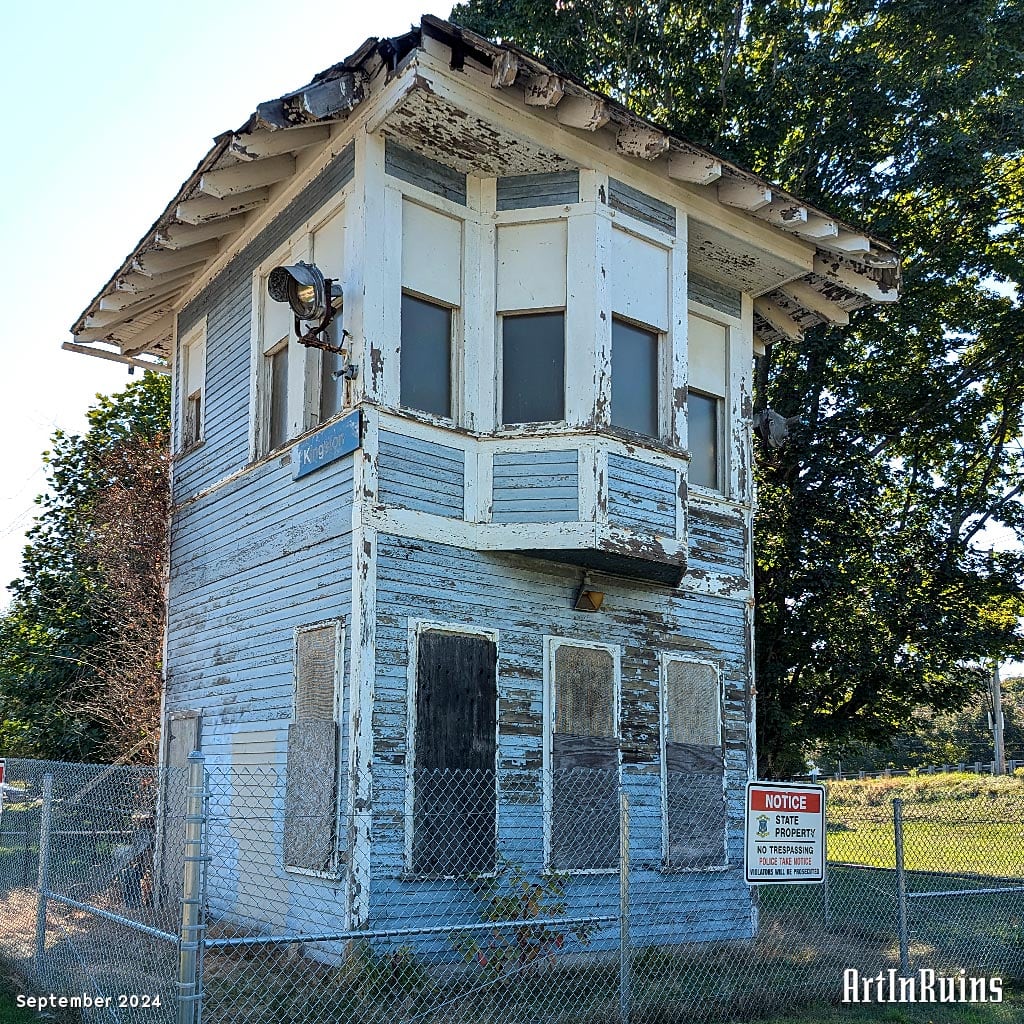
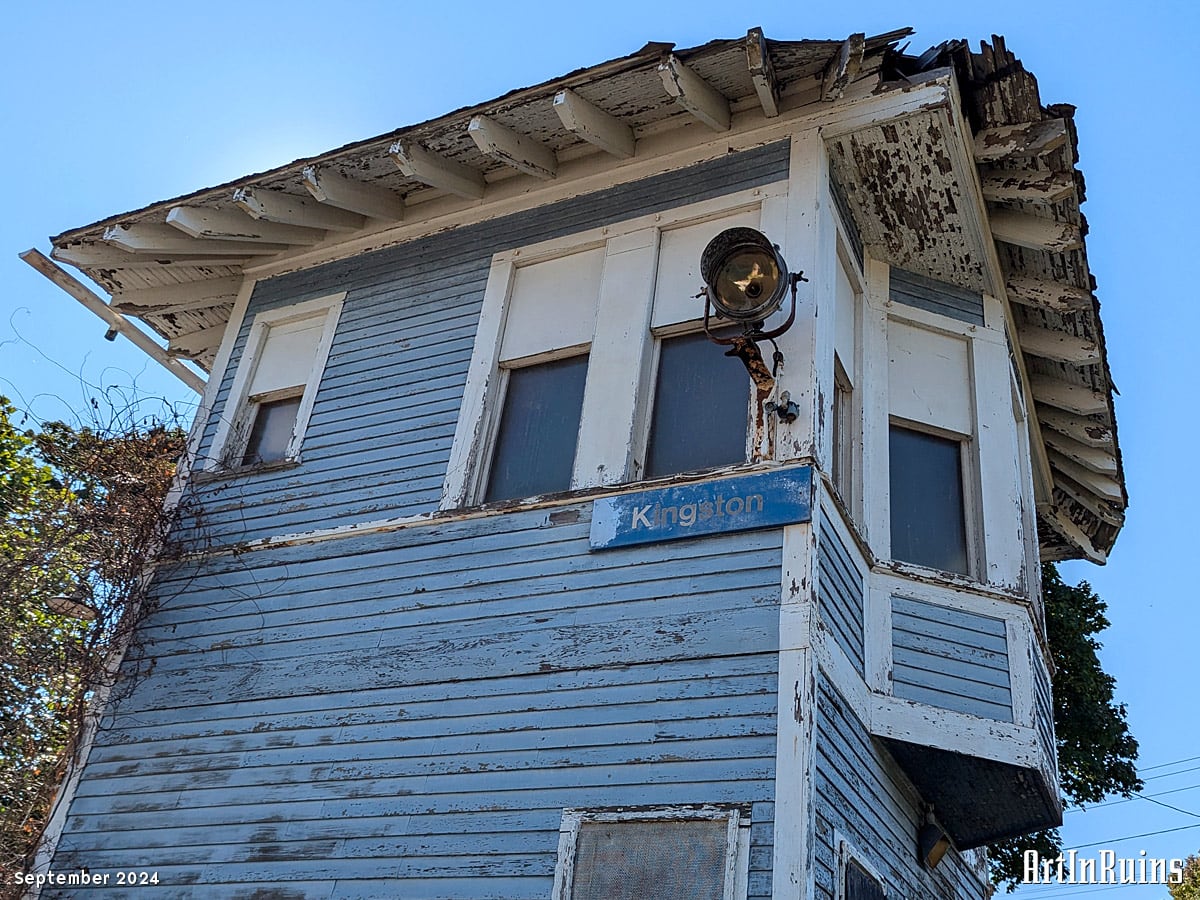
It is a two story, square base structure with a double hip roof featuring exposed joist ends around the perimeter. It is four bays wide with four windows on one side of the second floor and a bay window on another. The side that once faced the train tracks directly has the bay window. The other two walls have a few windows and a door to an external metal stair. The first floor has fewer windows overall but three below the face with the bay window. It is all wood construction with clapboard siding, rotting and decaying in most places.
Current Events
The tower continues to sit along Railroad Avenue, partially obscured by trees and the rise of Route 138 between it and Kingston Station.
History
Great article by John Desmond at Small State Big History titled “Railroad Signal Tower 133+ at Kingston Station Reconsidered.”
More about railroad signal towers and their operation at “Life of a Railroad Tower Operator” at Trains.com.
In the News
New home, new job for rail tower
by Tom Mooney
Providence Journal | September 21, 1987
Charles Sisson was the last man to work the Kingston railroad signal tower, to direct tons of rumbling steel from one track to another and feel the earth tremble as the trains roared by a few feet away.
That was six years ago.
At 1:47 Friday afternoon the last train to pass the two-story wooden building crept out of Kingston station heading north to Providence.
As the coaches slipped by, passengers wiped the fog from the windows and peered at the small group of men and women looking through the rain at the tower perched on a flatbed truck.
Moments later the train was gone — and so was the tower.
“I wouldn’t have missed this for the world,” said Sisson, 66, of Peace Dale, as the tower began the slow journey to its new location 100 yards away. “I’m a third generation railroad man and this place held a very special place in my heart.”
After more than three years of planning by the West Kingston Civic Association, the small, blue building with white trim was relocated Friday to a grassy spot of state land, framed by three majestic maples.
“It’s hard to believe it’s happened after all this time,” said Jane Whelan, a association member, whose husband, David, led the red tape battle to acquire the tower from Amtrak and lease the land from the Department of Transportation.
The association plans to use the bottom floor of the Kingston signal tower as a meeting hall and the second floor as a center for local railroad memorabilia.
The building, built around 1930, was once staffed around the clock by operators like Sisson whose job it was to switch trains from one track to another.
On a typical eight-hour shift, 38 trains would roar by the tower or slip into the station, he said. Today, only a handful of trains pass through Kingston each day.
Amtrak shut down the signal station in 1981. Three years later it moved the switching machinery to the train station a few hundred feet up the tracks and announced plans to tear down the tower.
But the association, made up of train buffs and commuters, organized to save this slice of life from the past for future generations.
Sisson worked on and off in the tower for 12 years before retiring in 1981 after 35 years as a railroadman.
He began his career with the New Haven Railroad (which the line was then called) as a crossing guard on Liberty Lane, waving a kerosene lantern or stop sign in front of traffic as the trains crossed the road.
But like his father, he yearned to be a signalman.
After his eight-hour shift as a crossing guard was over, he would drive to the Kingston signal tower “just to hang around and learn the operation. This was one of the best-run signal towers around.”
Tower operators worked alone. The plywood walls were bare except for one calendar.
“They wanted your undivided attention to your job,” Sisson said. “There was a tremendous amount of responsibility because the lives of many people depended on what you did or didn’t do.”
Today, rail switching is done by computers and most signal towers have been torn down.
— MOONEY, TOM. “New home, new job for rail tower.” Providence Journal (RI), CITY ed., sec. NEWS, 21 Sept. 1987, pp. A-03. NewsBank: America’s News, https://infoweb.newsbank.com/apps/news/openurl?ctx_ver=z39.88-2004&rft_id=info%3Asid/infoweb.newsbank.com&svc_dat=NewsBank&req_dat=D4BD6B42F1AB4706B5E1244D477DEE03&rft_val_format=info%3Aofi/fmt%3Akev%3Amtx%3Actx&rft_dat=document_id%3Anews/15252988D25859A0. Accessed 13 July 2025.