Citizen’s Savings Bank, Hoyle Square
also known as Hoyle Tavern, Hoyle Hotel, Canonicus Square, 870 Reserve
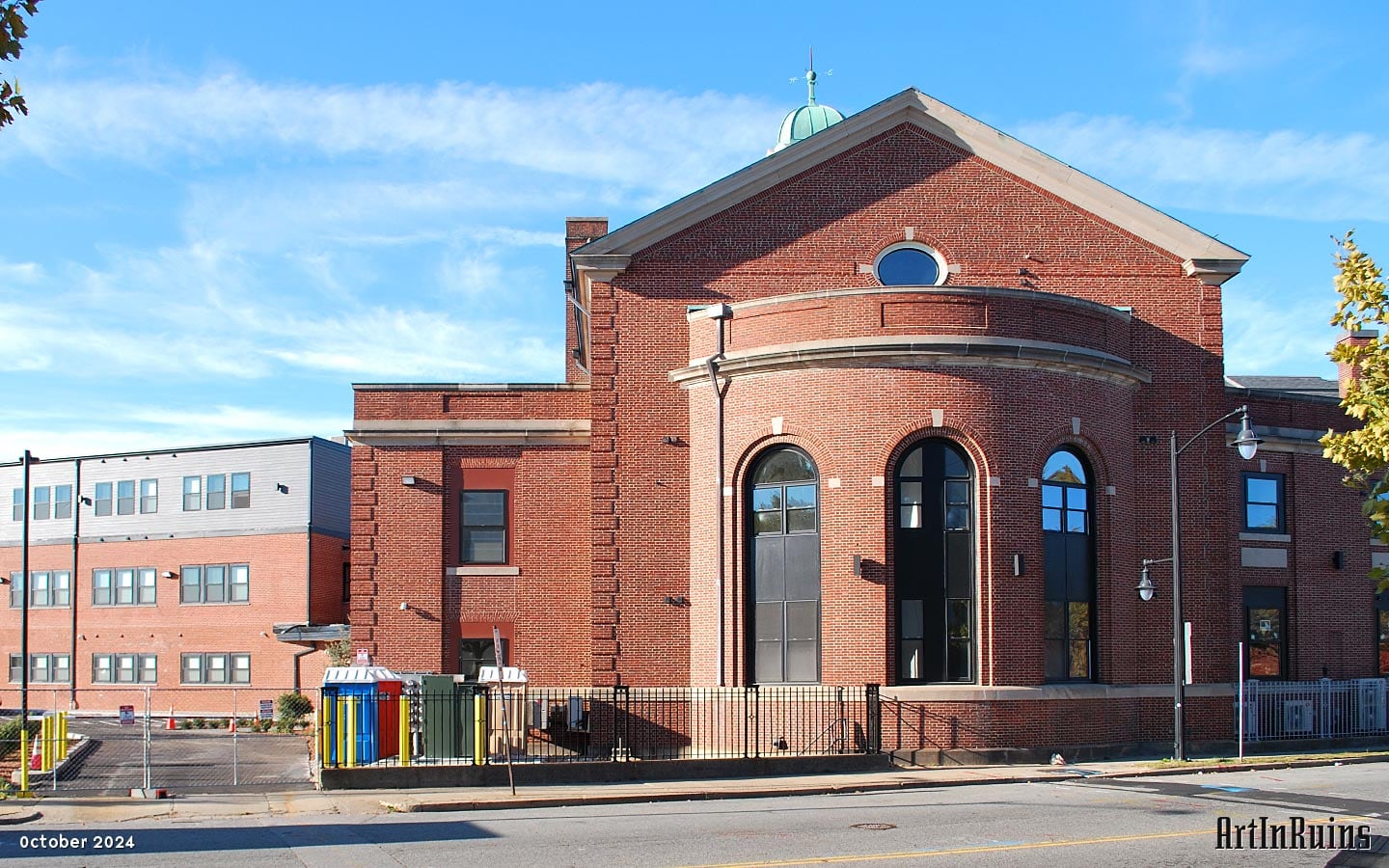
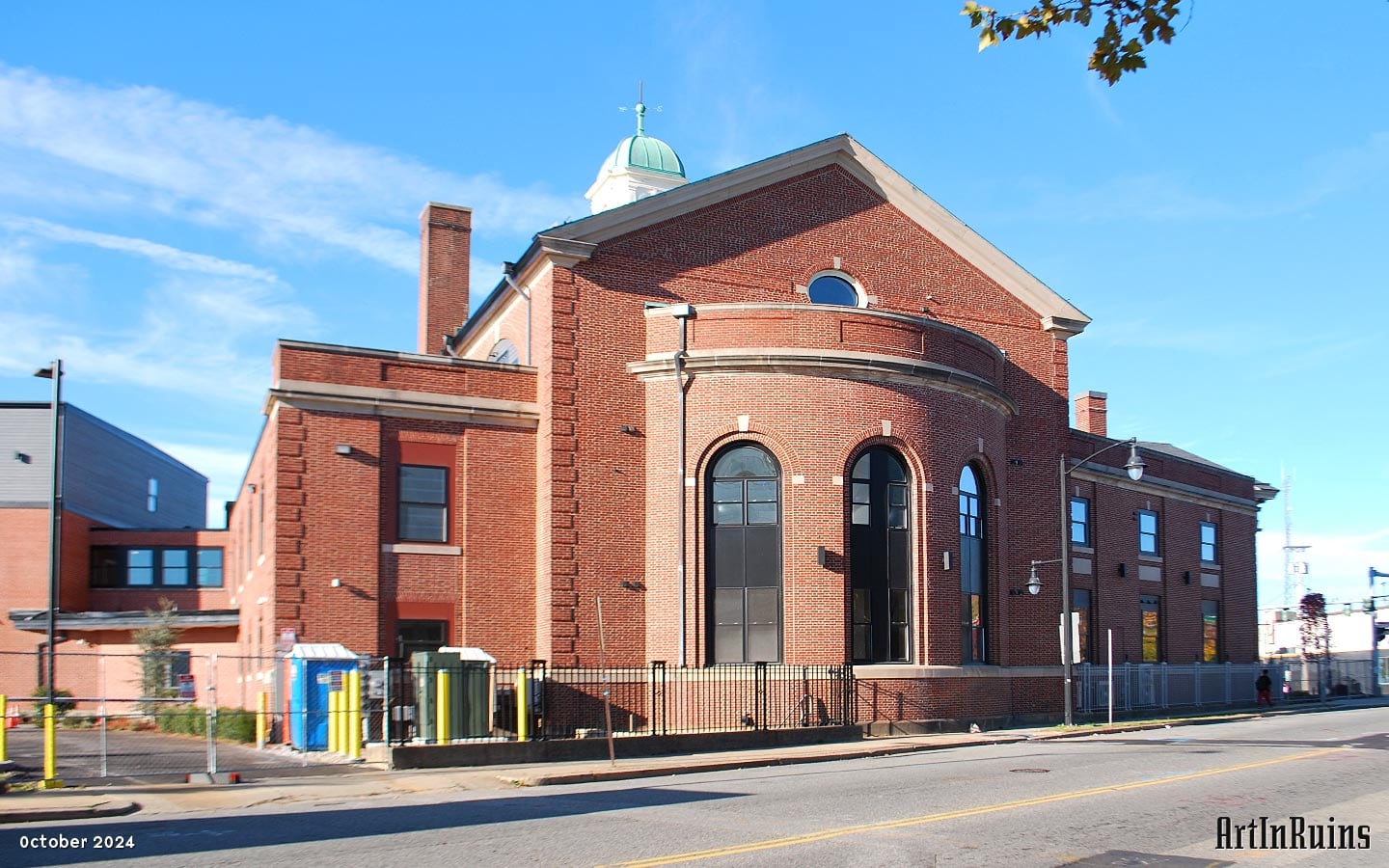
A one hundred year old Georgian-style bank is converted to residential units on a corner that was once a 1700s-era colonial tavern
images of this Property
-
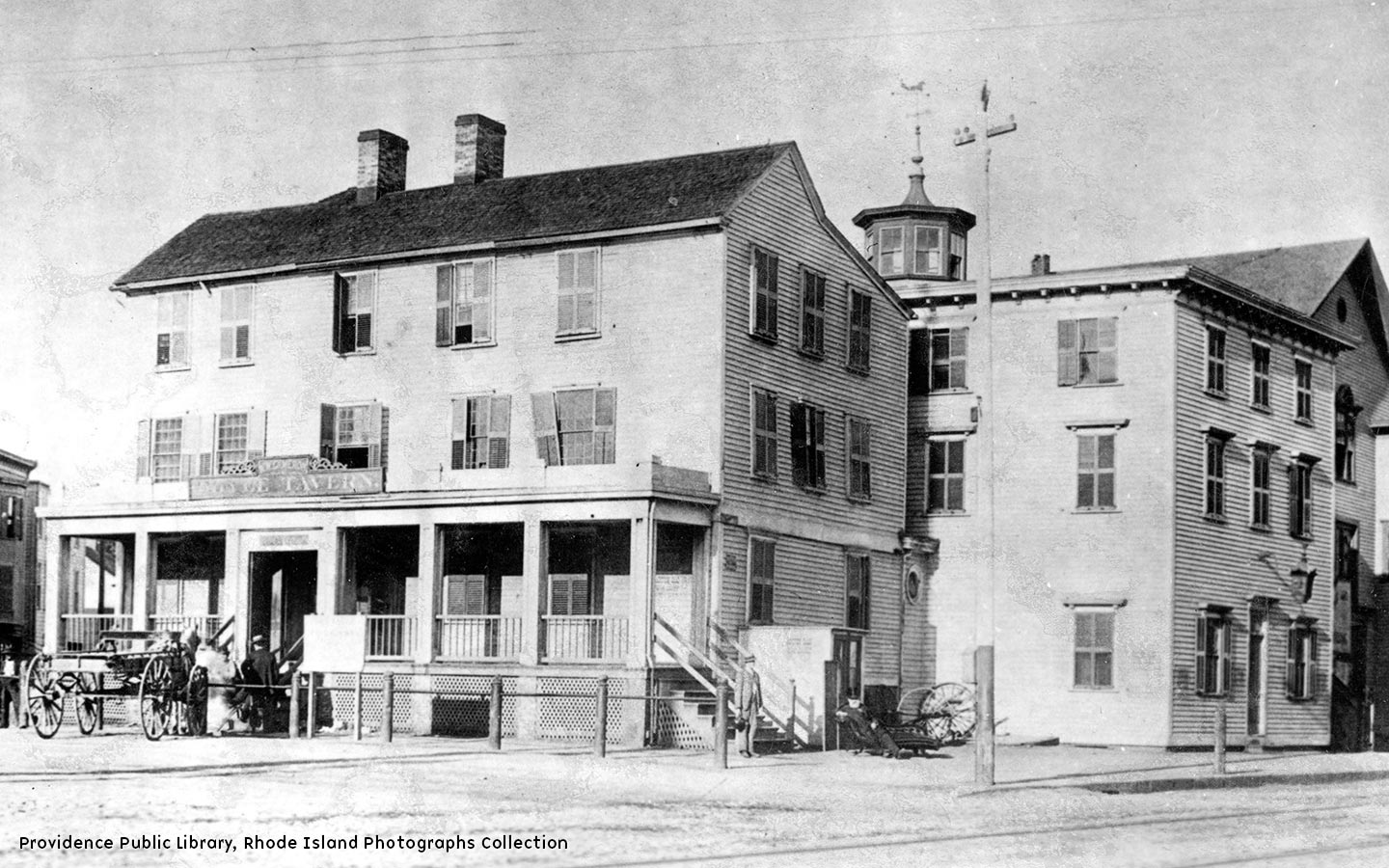
Undated — Rhode Island Photograph Collection, Providence Public Library -
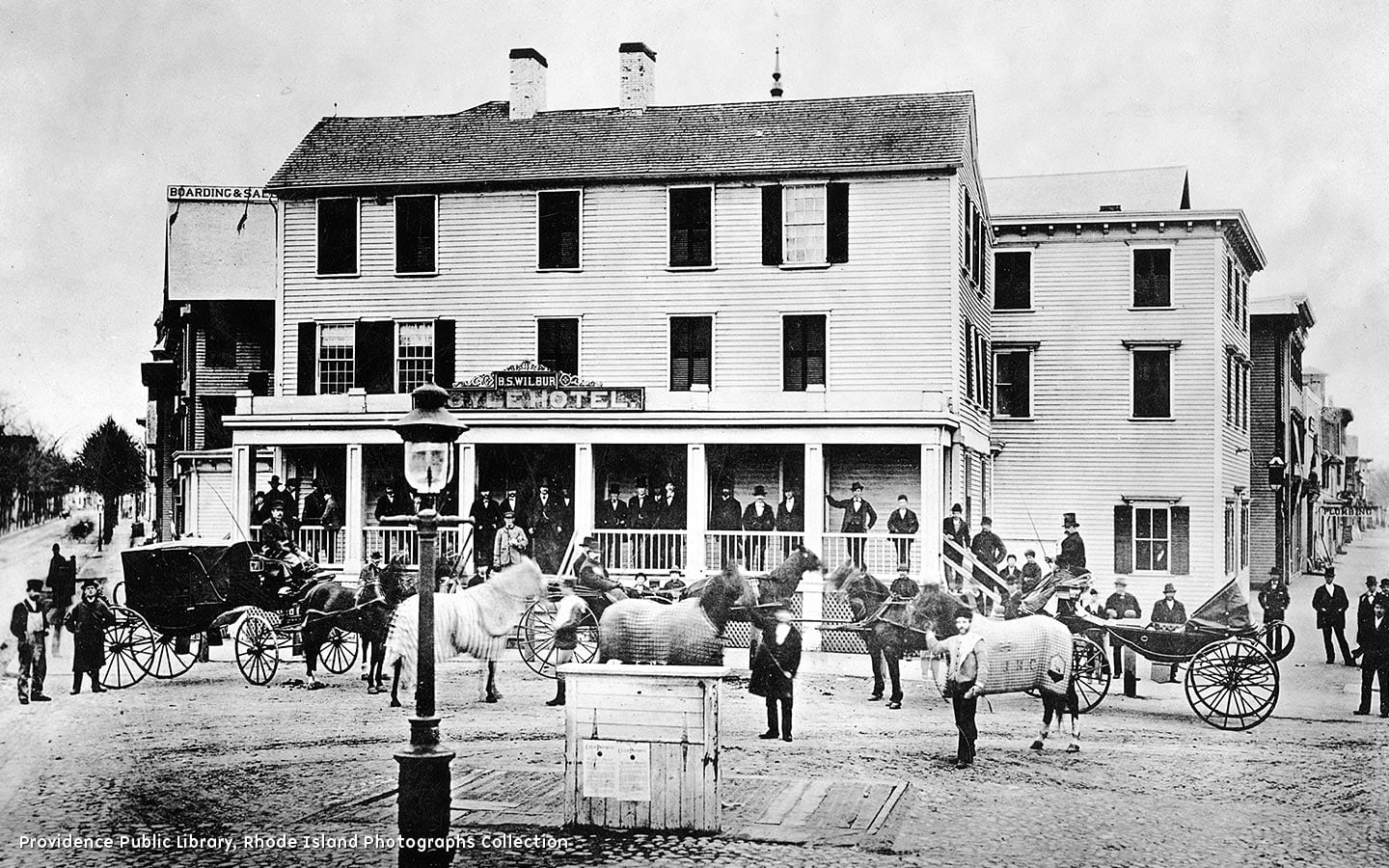
Undated — Rhode Island Photograph Collection, Providence Public Library -
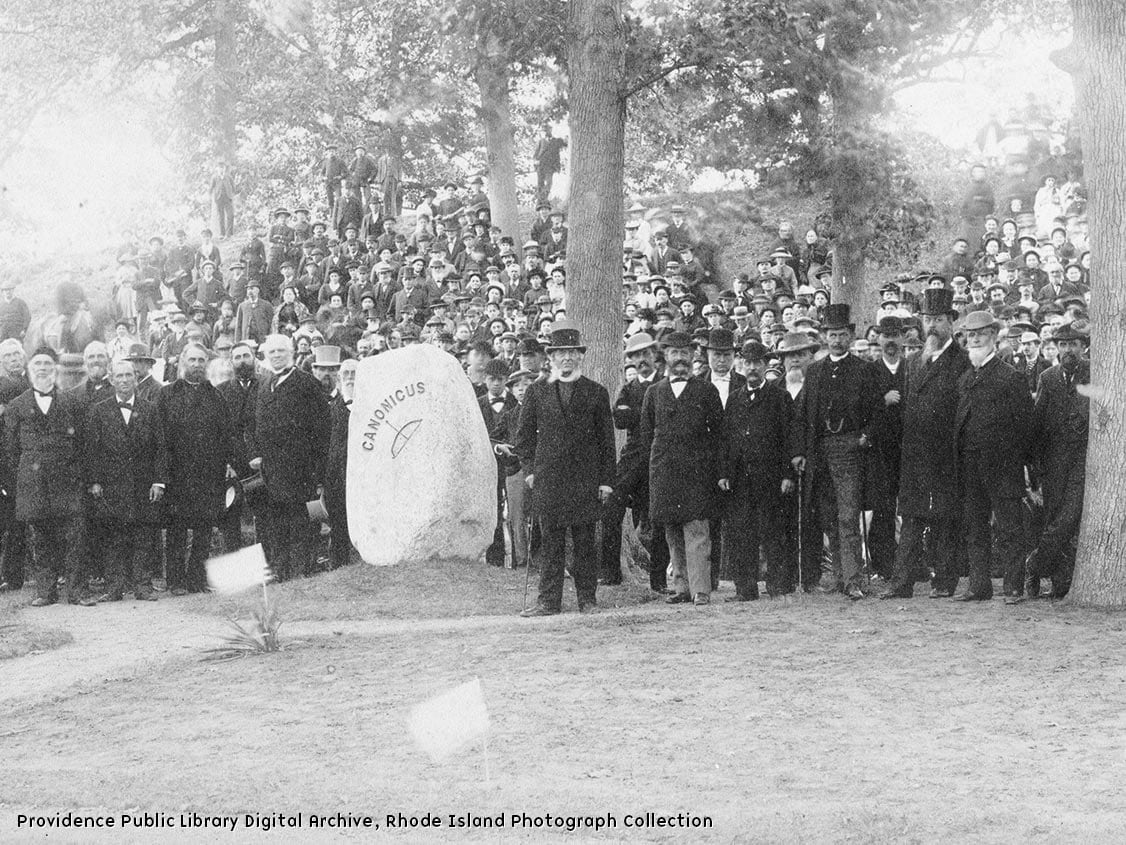
September 1888 — Providence Public Library Digital Archive, Rhode Island Photograph Collection -
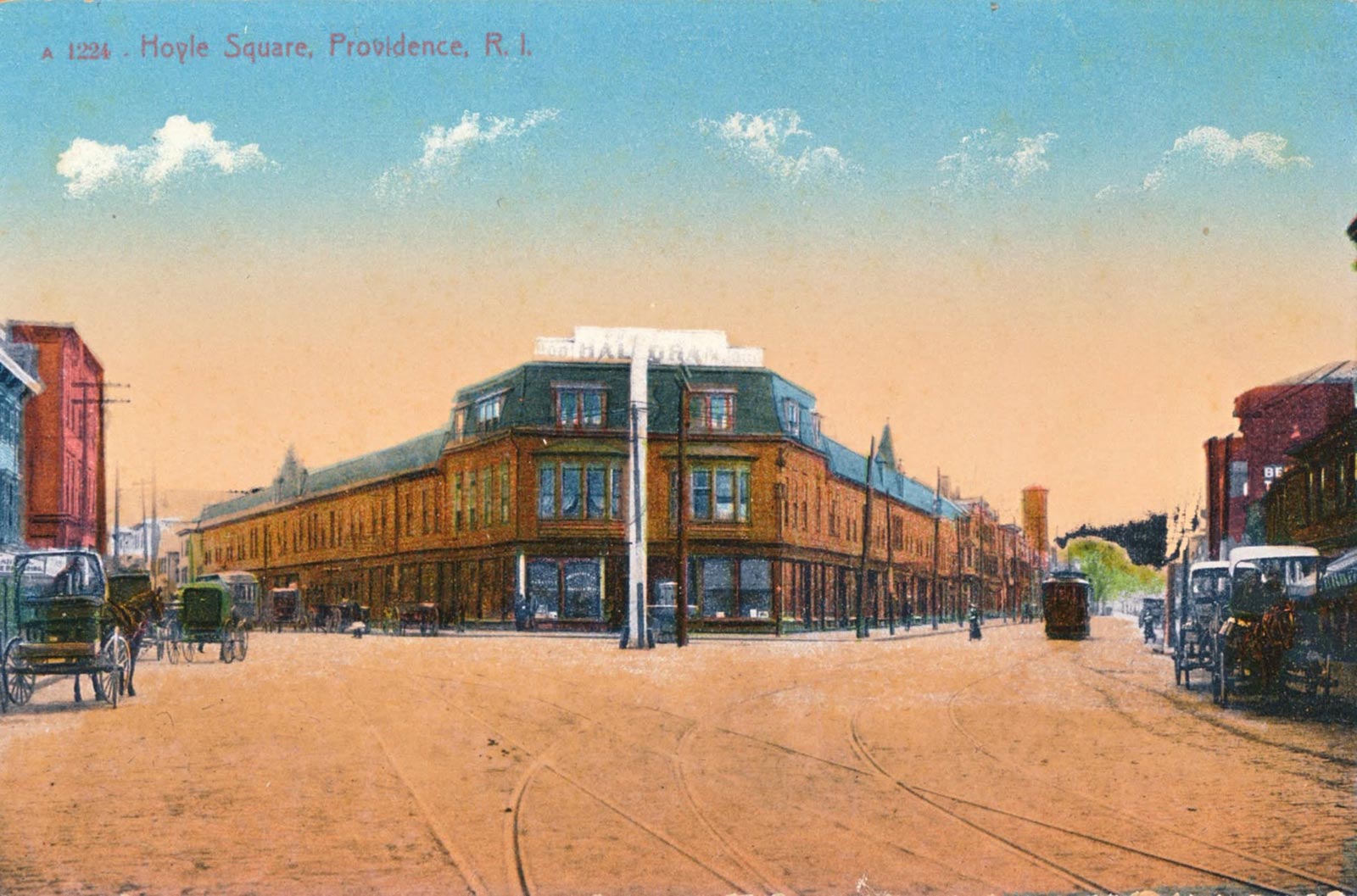
Painted postcard view of the Halloran building at the intersection of Cranston and Westminster Streets. Postcard posted by Quahog.org via Facebook. -
![]()
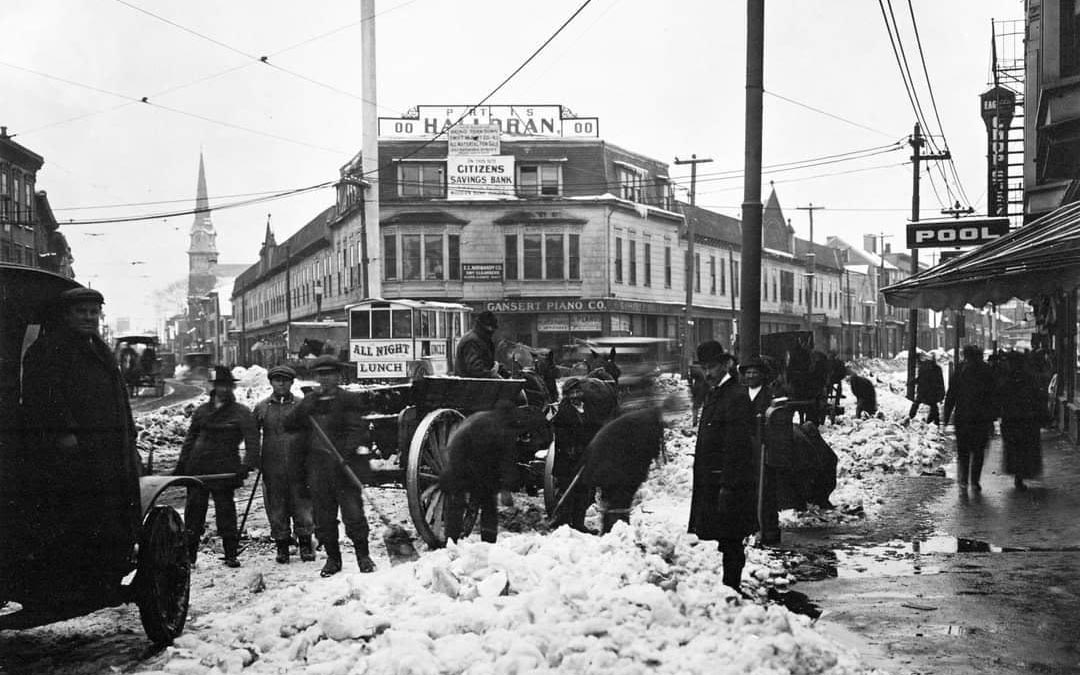
Workers shovel snow into a cart along Westminster Street with the Holloran retail buildings behind them. On the façade of the wood-frame structure is a sign with “Citizens Bank” legible, and in front is a diner car labeled “All Night Lunch.” Photo of unknown origin posted by Shelby Salzberg via Facebook, undated (between 1890 and 1920). -
![]()
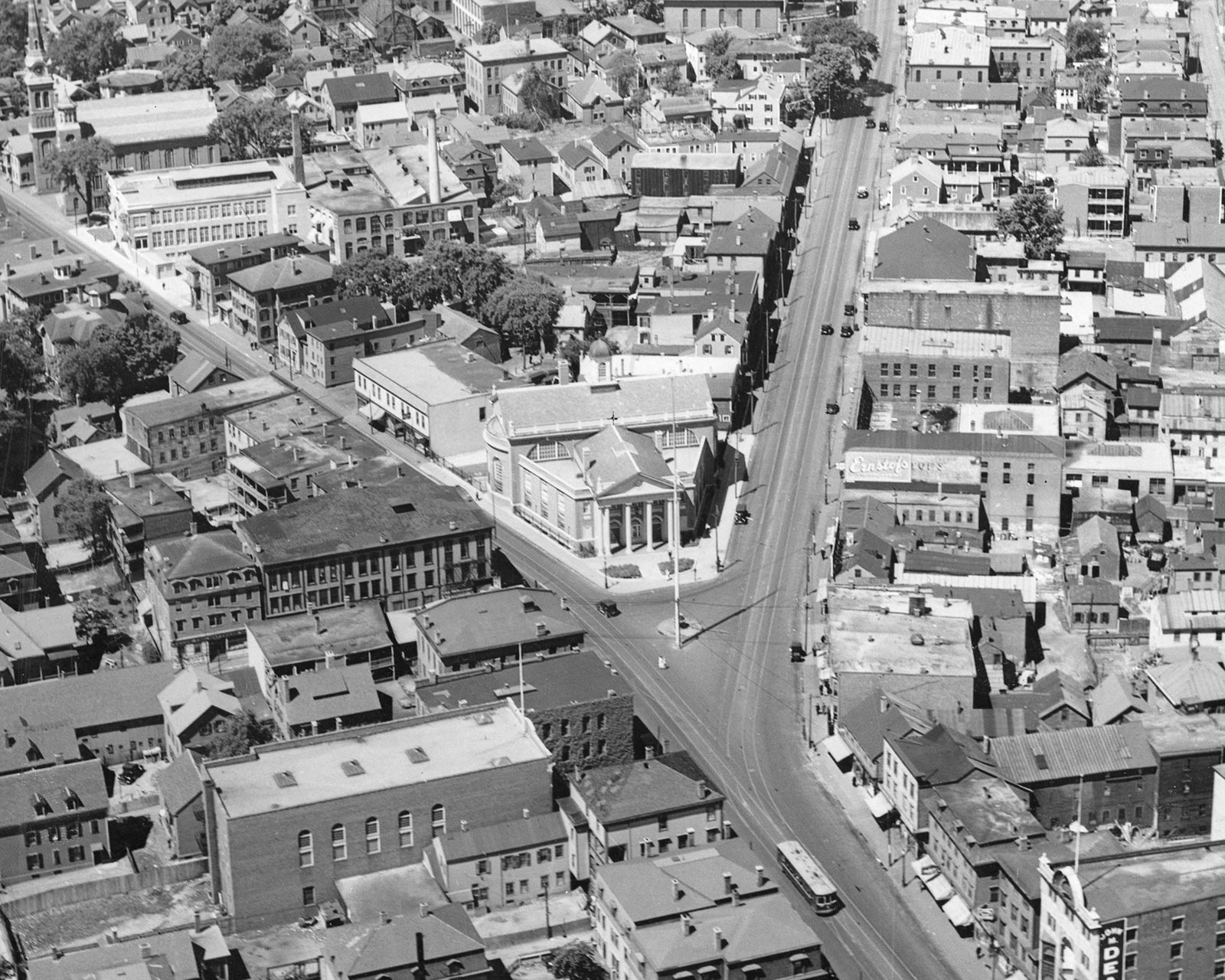
Undated, likely between 1921 (when the bank was constructed, center of photo) and before 1938, when a hurricane damaged the spire of the Church of the Mediator, top left). Providence Public Library, Rhode Island Photographs Collection -
![]()
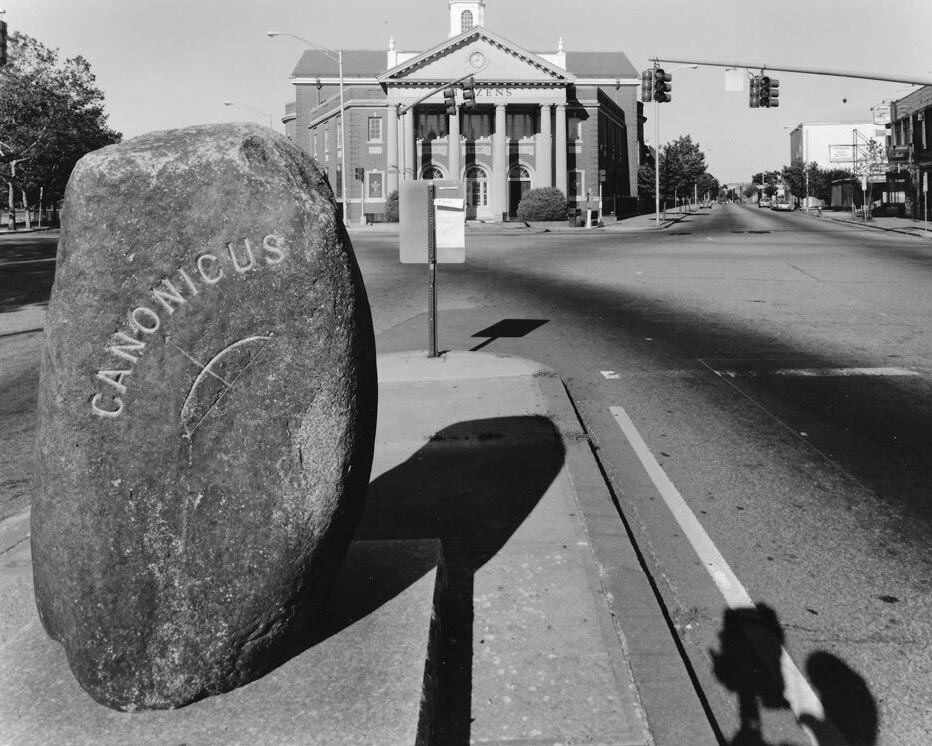
At some point, the stone monument to Canonicus was moved from the North Burial Ground to this location in the traffic median in what was renamed Canonicus Square. Circa 1990s. Photo found on RhodeTour.org credited to the West Broadway Neighborhood Association. -
![]()
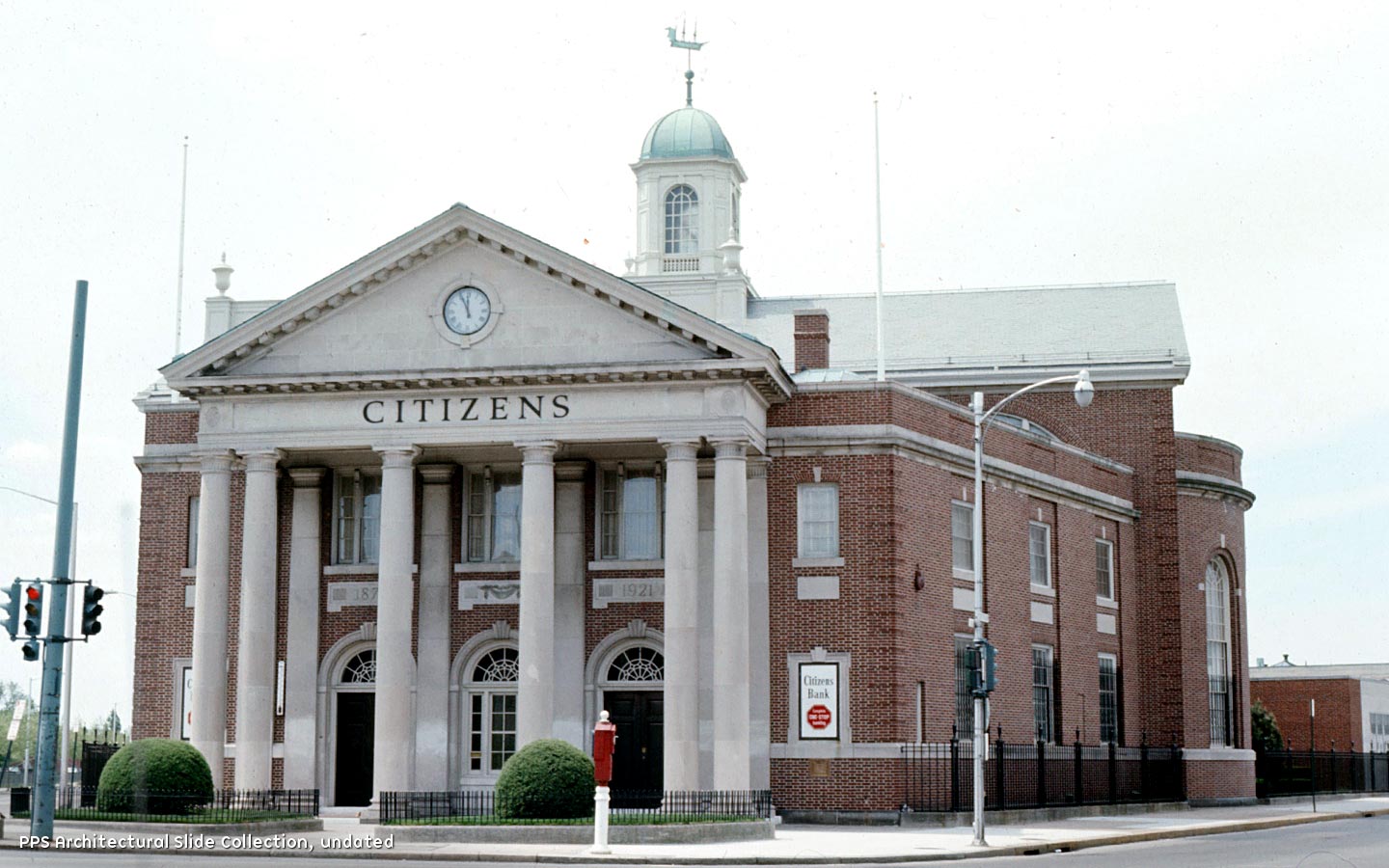
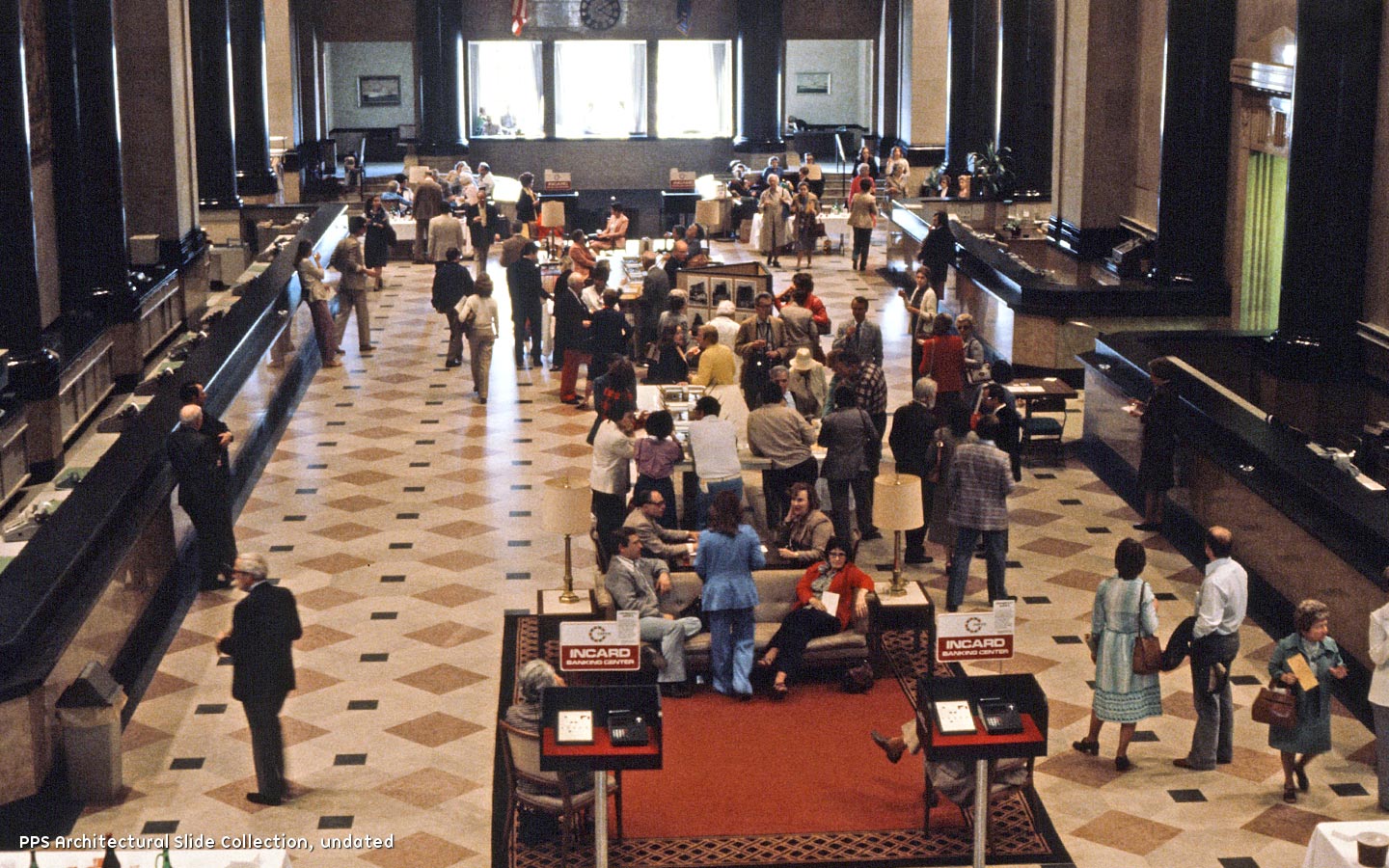
Undated — PPS Architectural Slides Collection -
![]()
Undated — PPS Architectural Slides Collection -
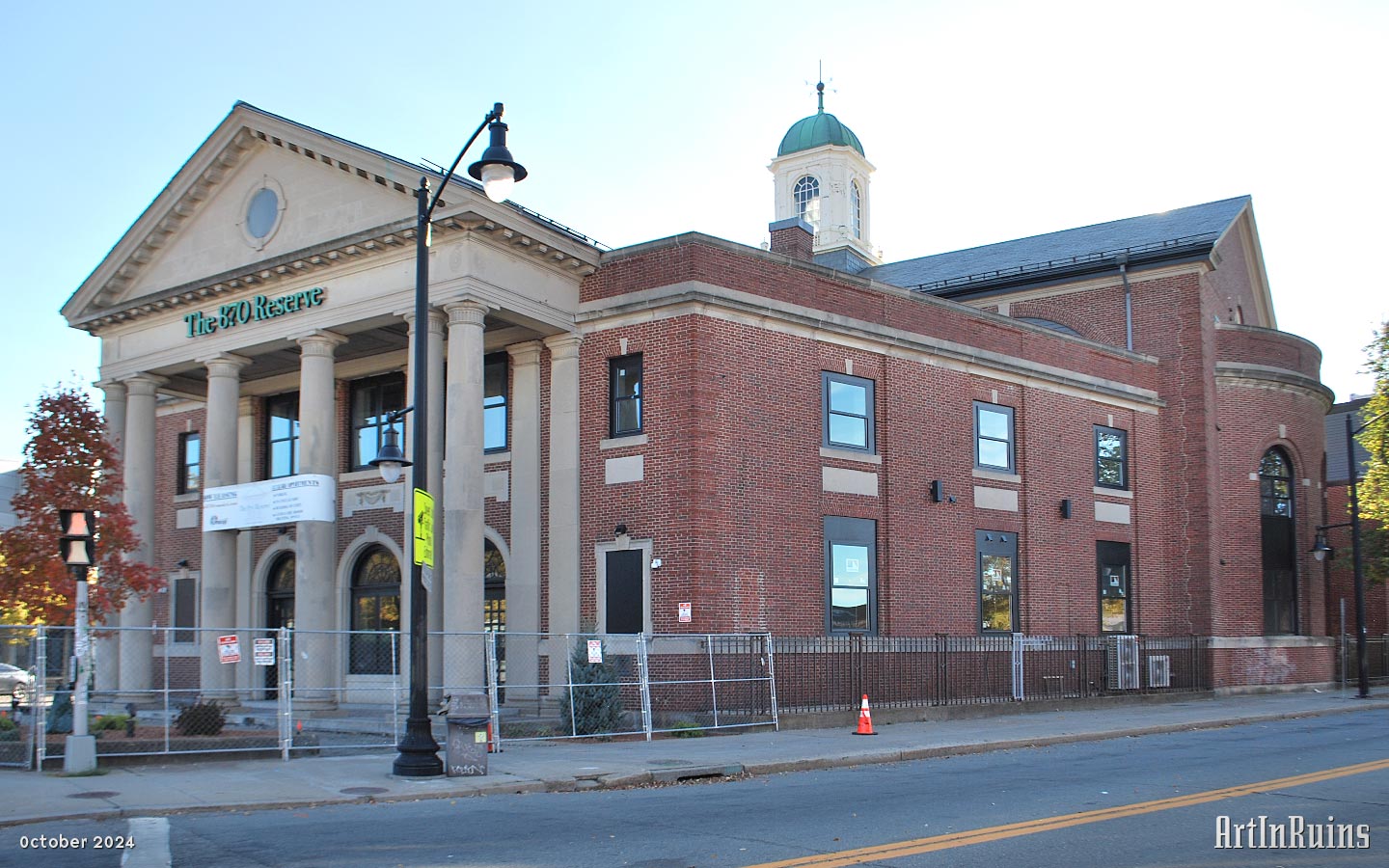
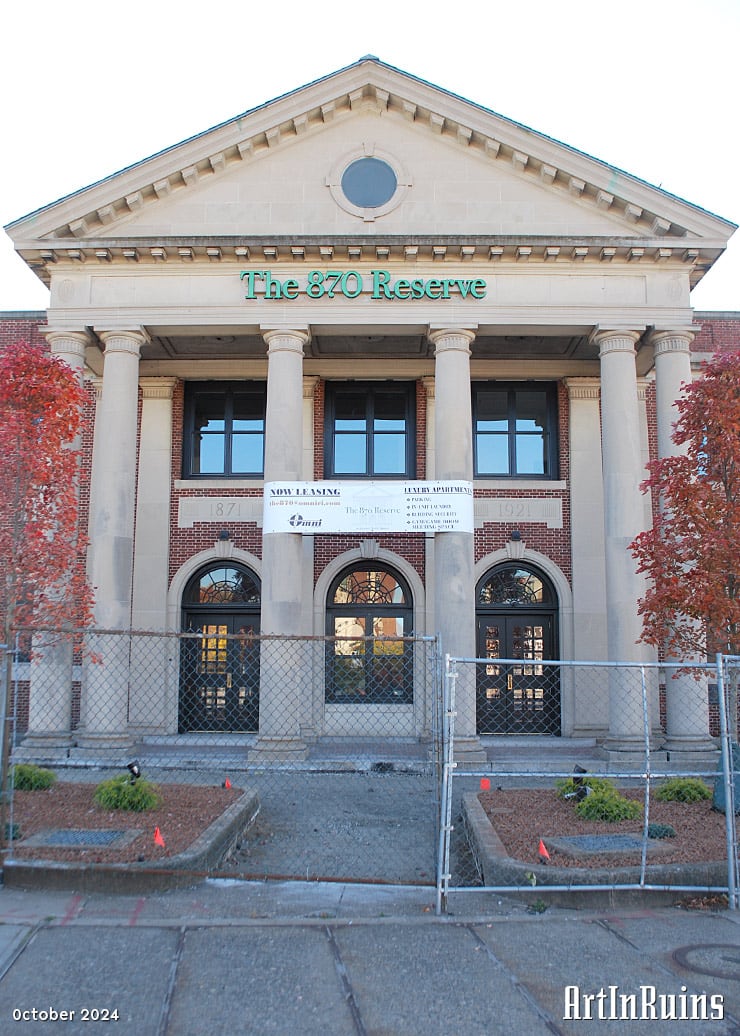
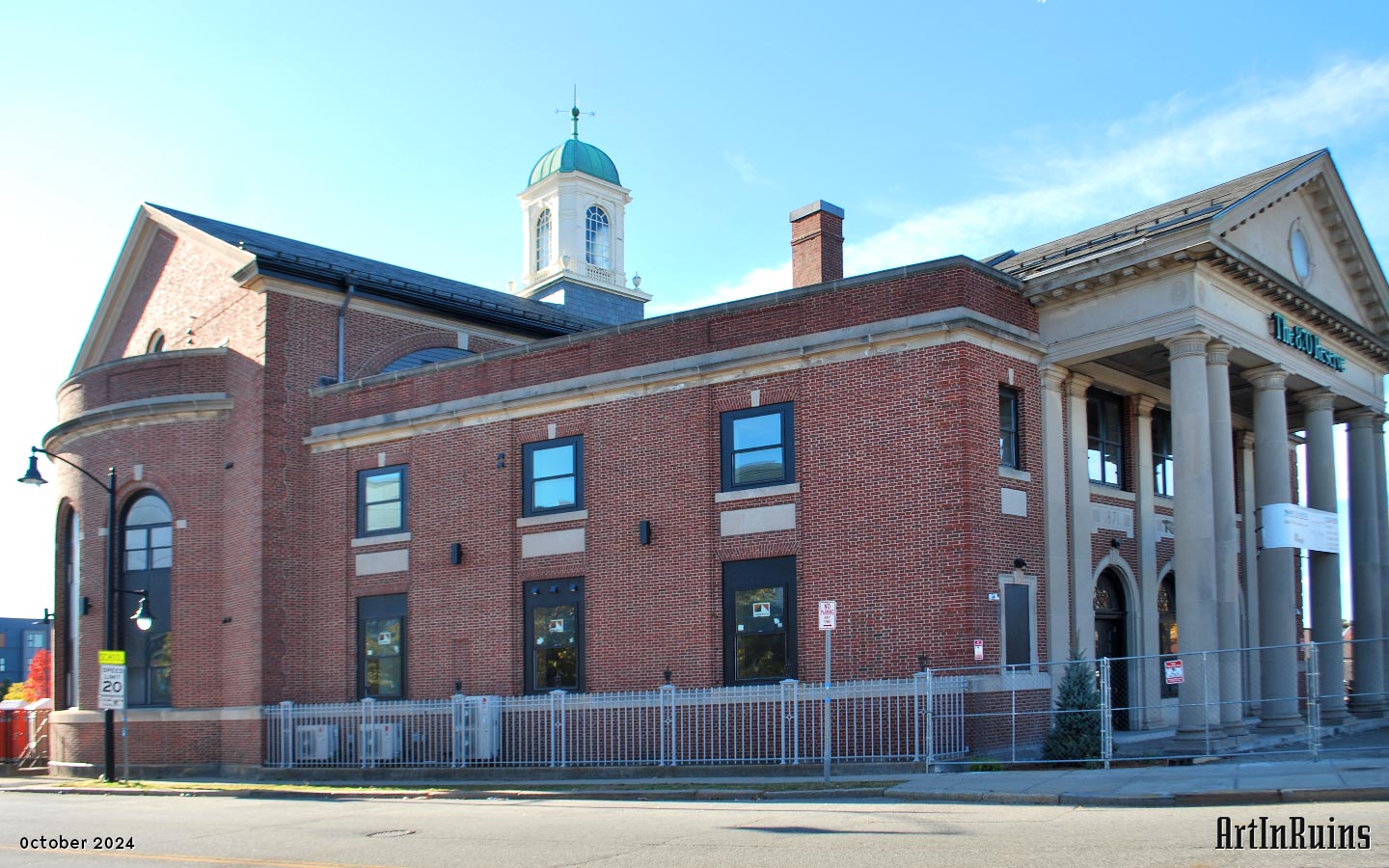
![A stately two and two and a half story Georgian-style red brick and tan limestone bank building on a corner where two road that diverge diagonally start at a single point. The building is shaped to fit the trapezoidal nature of the land it sits upon. A large triangular pediment sits atop four sets of columns at the front façade. The rectangular portion with the pediment contains the main lobby and consumer-facing offices, while a gable-roof building topped with a cupola at the back of the property was the bank offices.]()
-
![]()
-
![]()
-
![]()
-
![]()
-
![]()
-
![]()
-
![]()
-
![]()
-
![]()
-
![]()
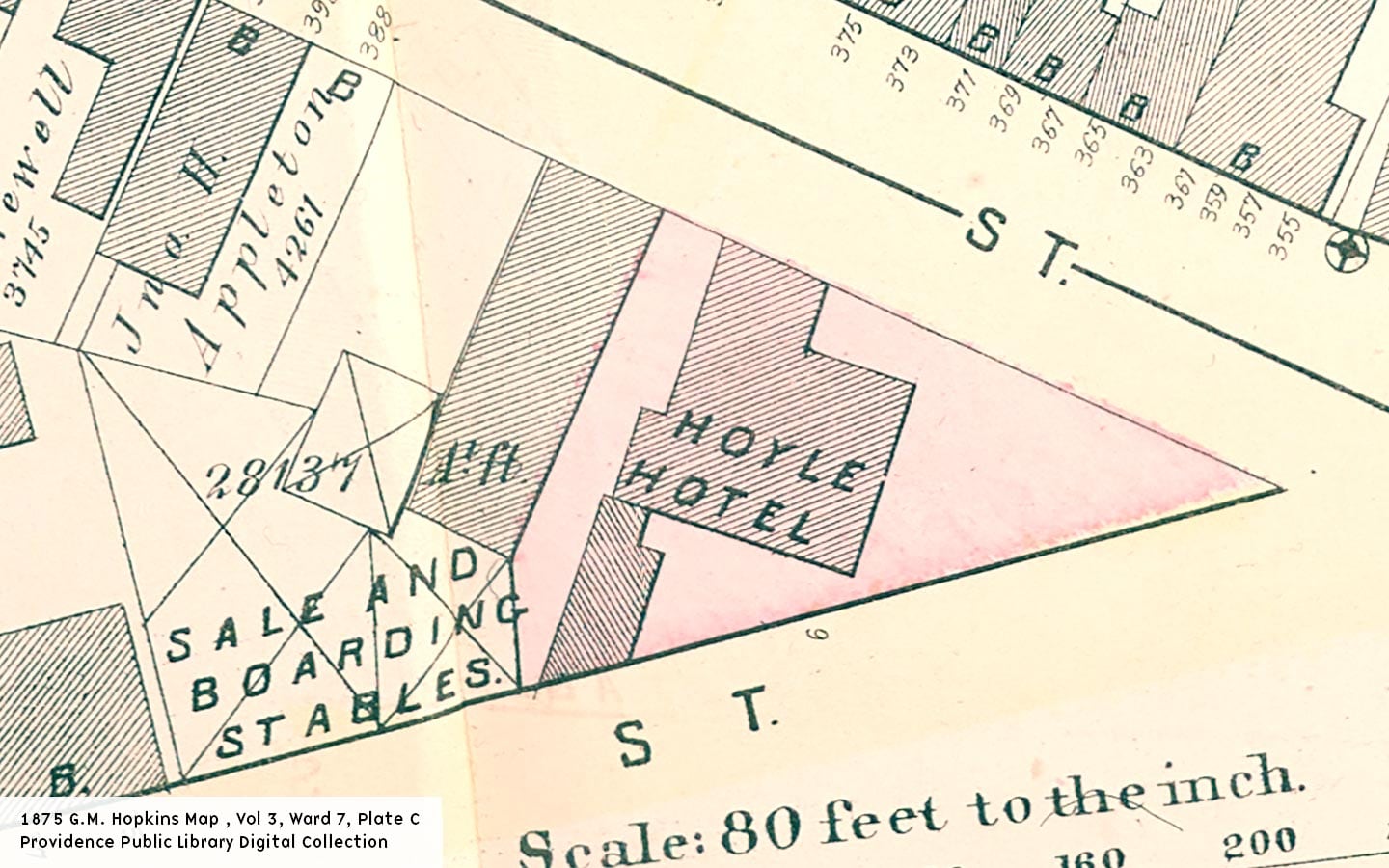
1875 G.M. Hopkins Map, Volume 3, Ward 7 Plate C — Providence Public Library Digital Collection -
![]()
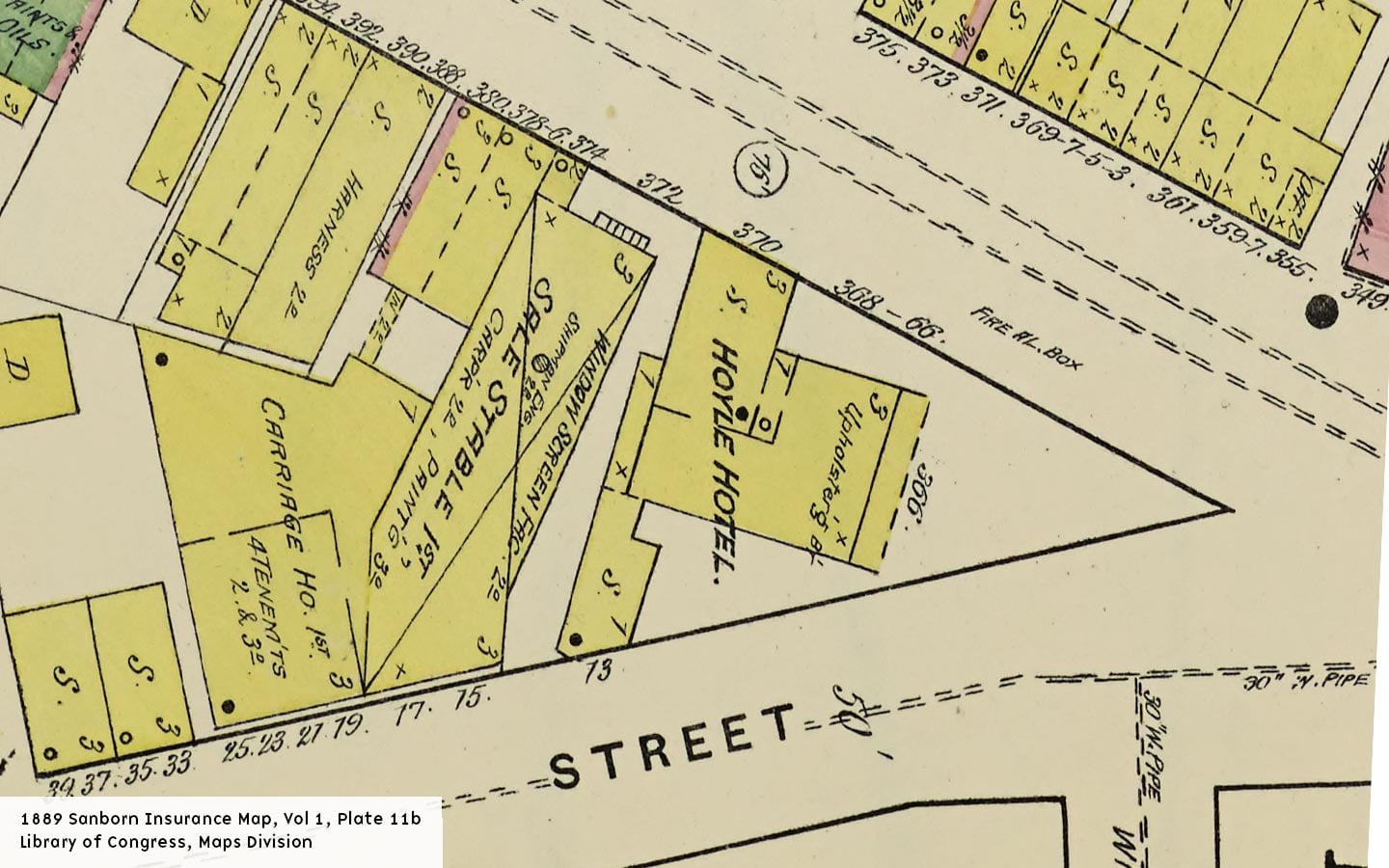
1889 Sanborn Insurance Map, Volume 1, Plate 11b — Library of Congress, Maps Division -
![]()
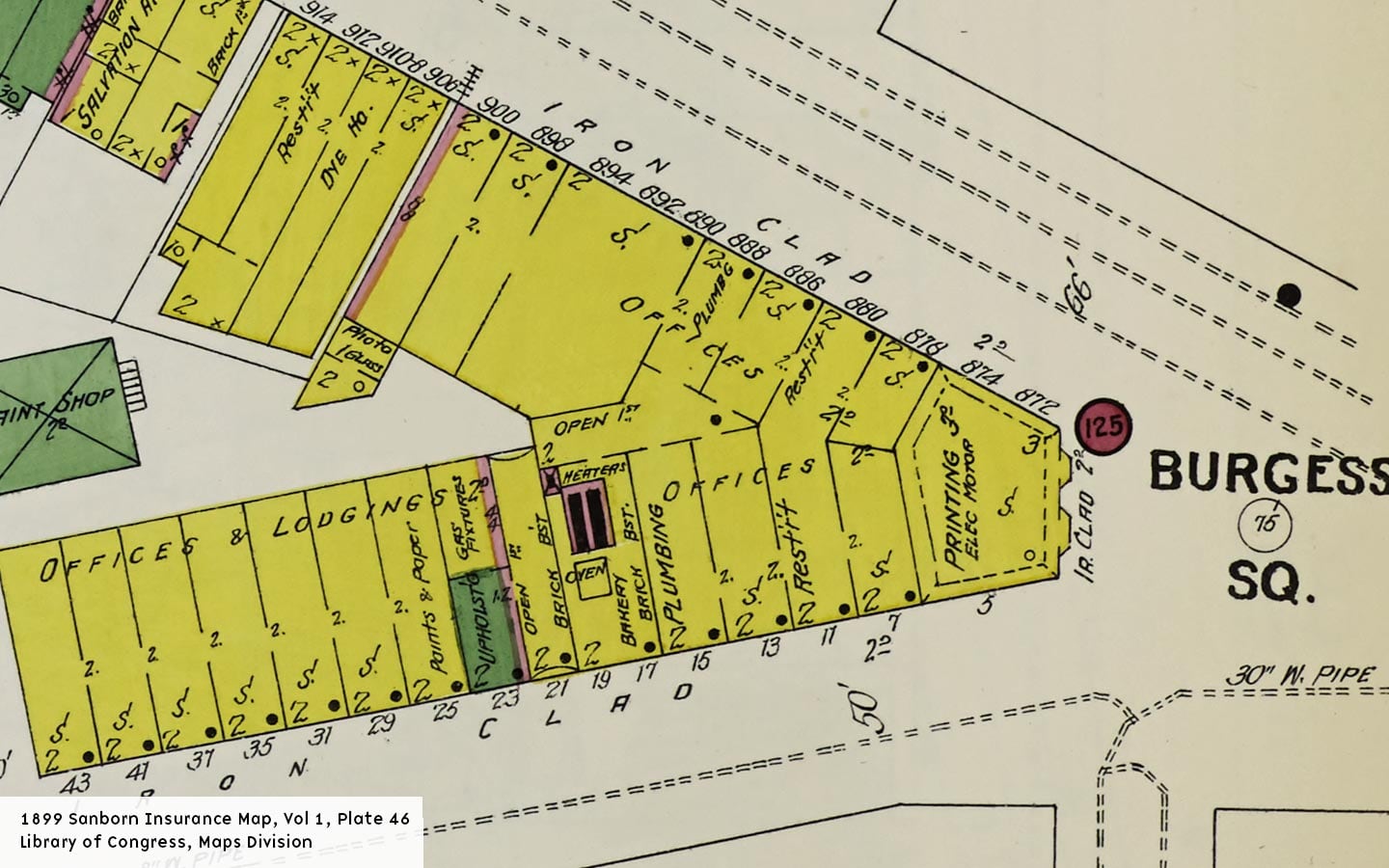
1899 Sanborn Insurance Map, Volume 1, Plate 46 — Library of Congress, Maps Division -
![]()
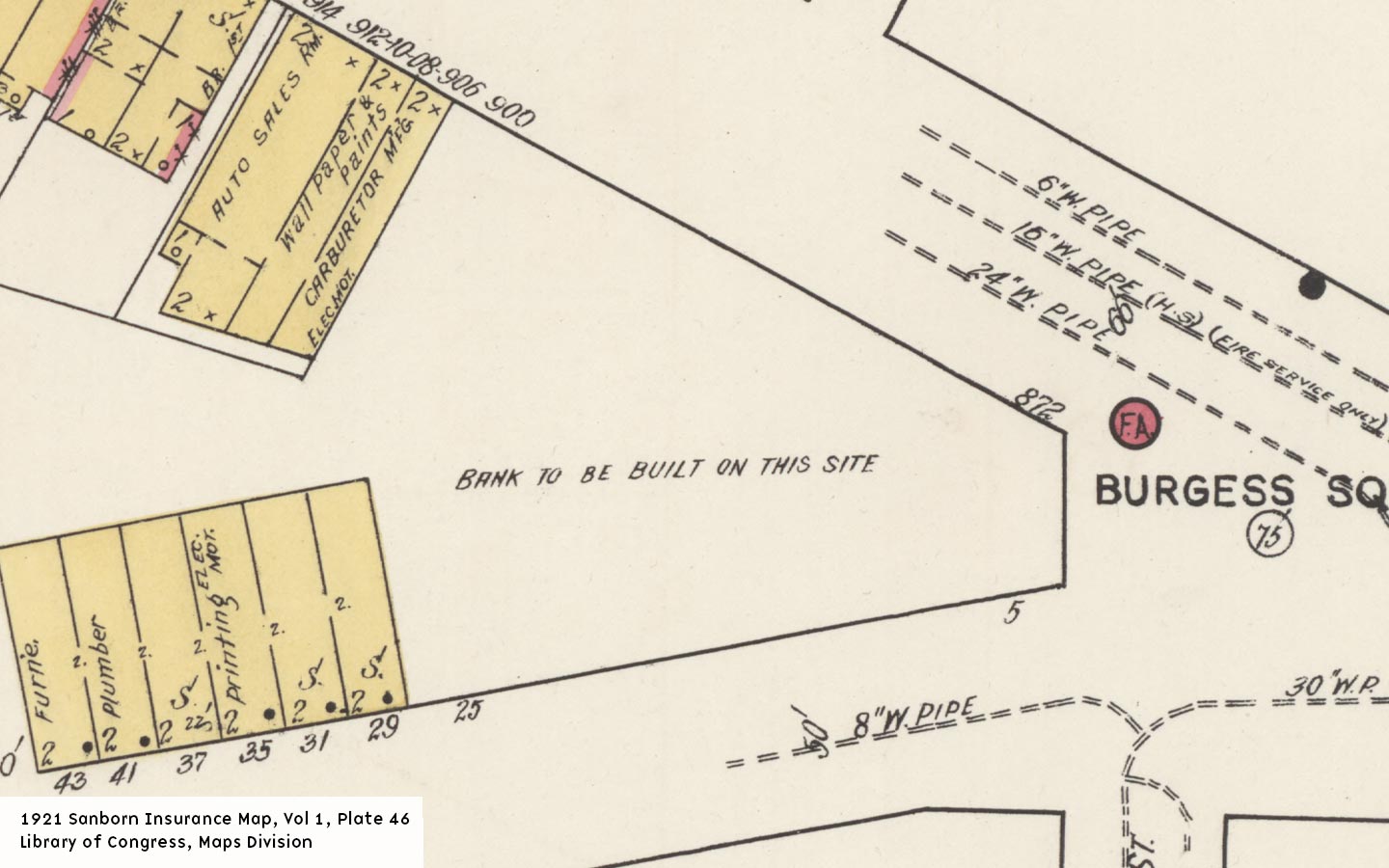
1921 Sanborn Insurance Map, Volume 1, Plate 46 — Library of Congress, Maps Division
23 images: Press to view larger or scroll sideways to see more. Contributions from the Providence Public Library Digital Collection, Christopher Martin of Quahog.org, Shelby Salzberg via Facebook, Rhode Tour and the West Broadway Neighborhood Association, and PPS Architectural Slides Collection
About this Property
Redevelopment
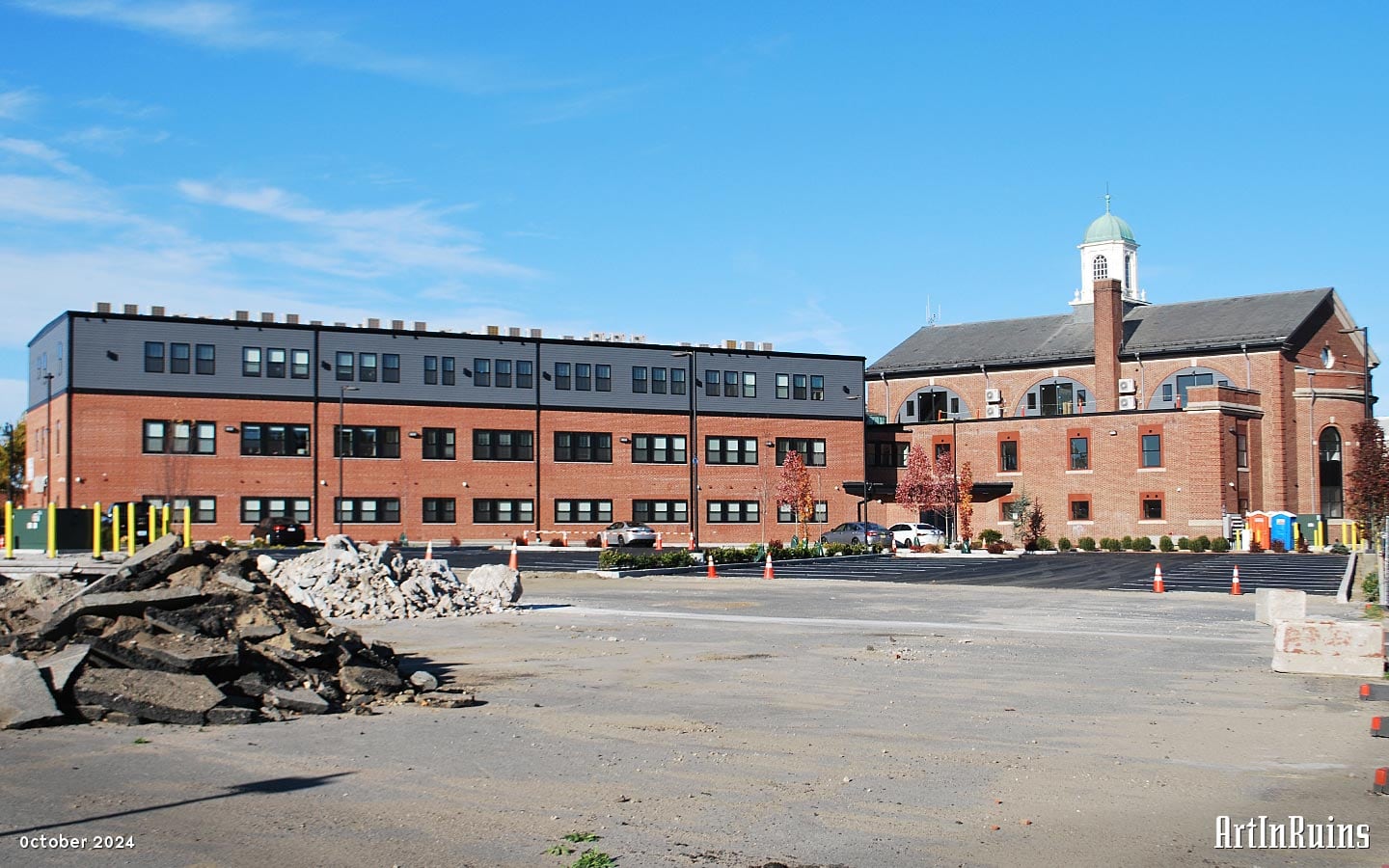
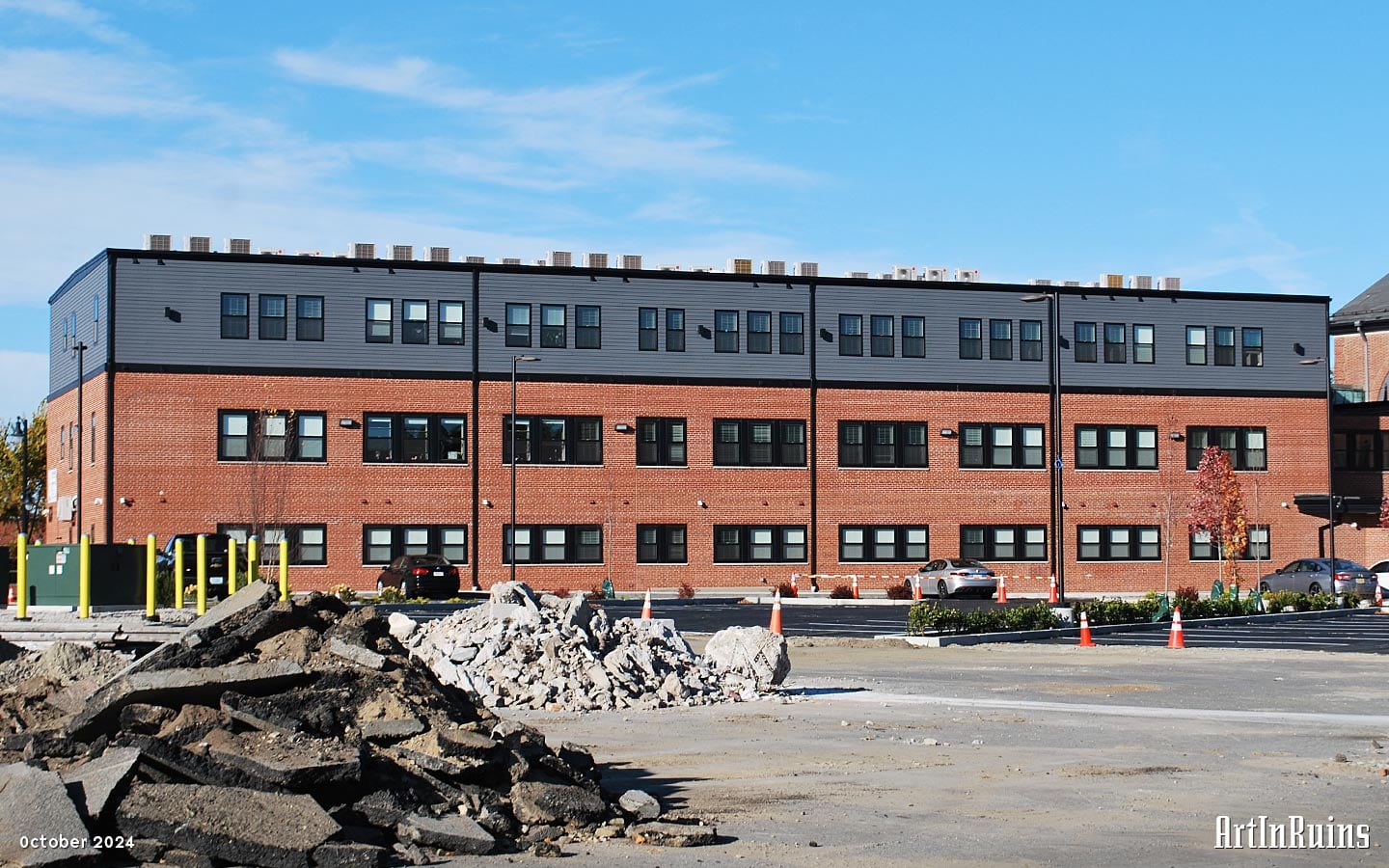
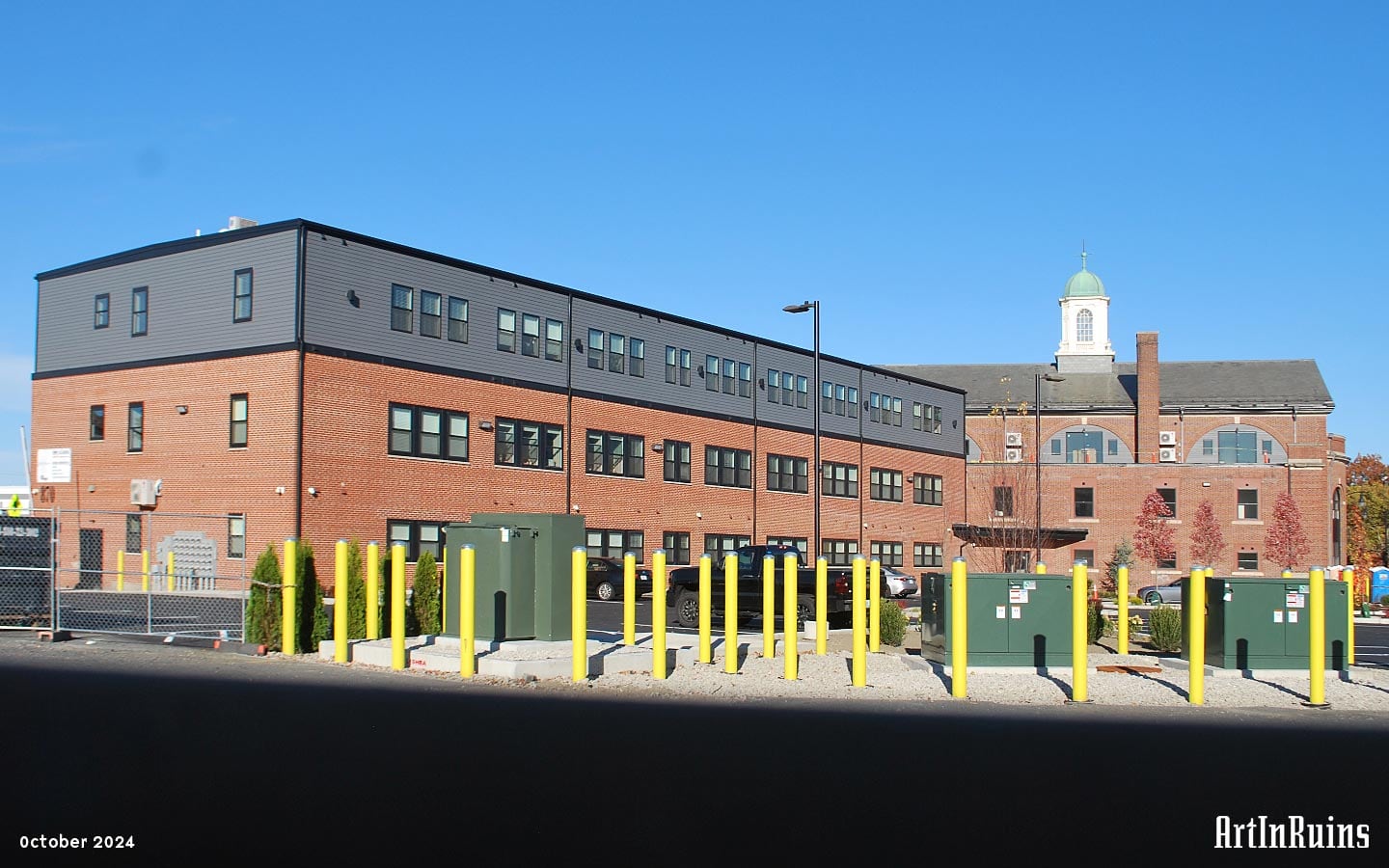
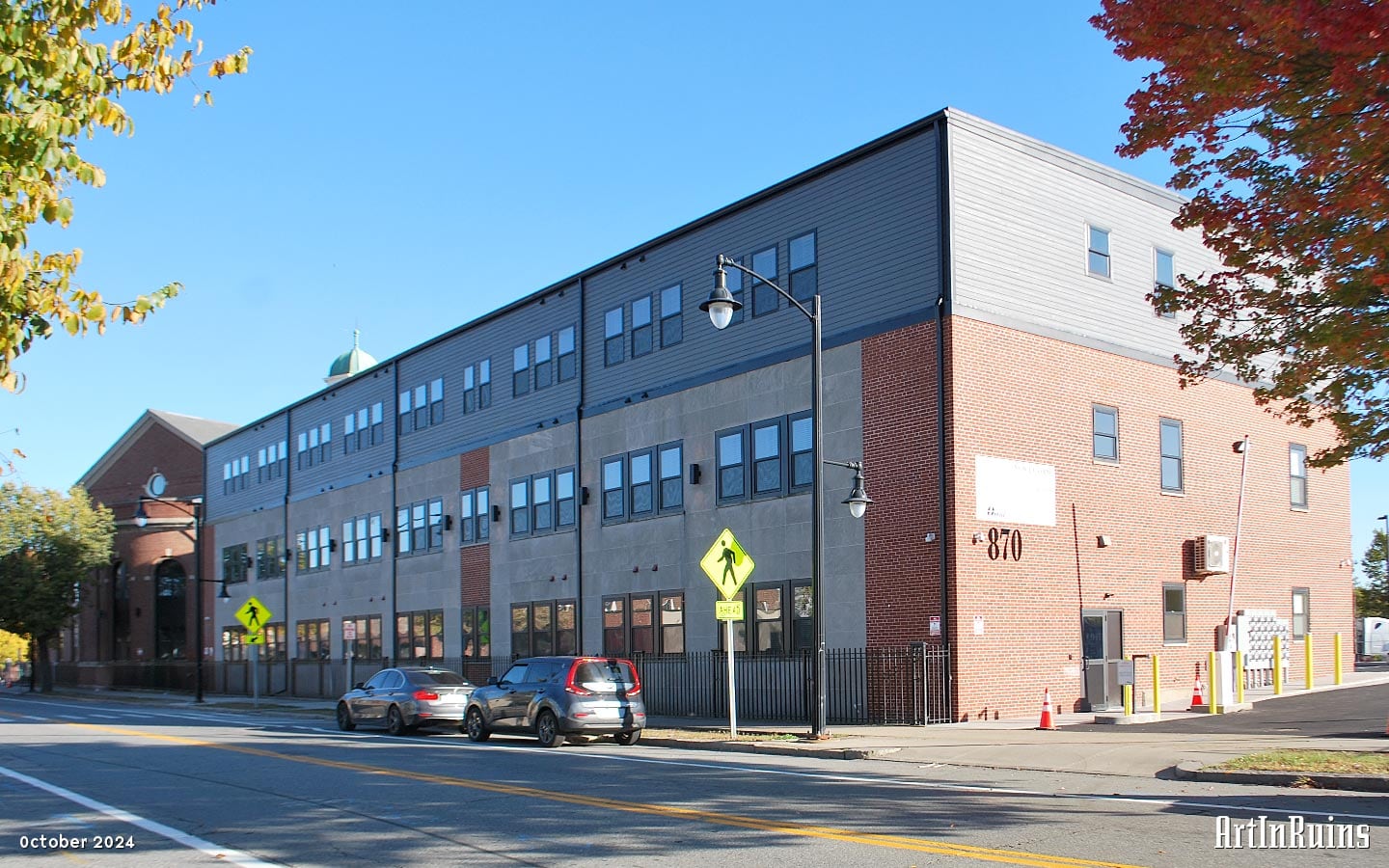
Citizens Bank moved out of its 1921 branch at the corner in 2019.1 The property includes six contiguous parcels covering 2.57 acres, with the bank, a 1978 annex, and a lot of surface parking. All of this on a well-travelled corner at the diverging of Cranston and Westminster Streets, across from Classical High School, Central High School, and the Providence Career & Technical Academy. Naturally, it attracted some developer interest.
The Omni Group came forward with a redevelopment plan in 2019. It called for three new three-story apartment buildings with 16 units each on the old bank parking lots along Westminster Street, about 20 apartments inside the bank, and a future mixed-use building along Cranston Street that wasn’t part of the short-term plan. The submitted plans to the City Plan Commission were too old for us to retrieve at this time.
Neighbors and preservationists objected, however. The West Broadway Neighborhood Association (WBNA) and the Providence Preservation Society (PPS) said the plan had no affordable units and no real street-level retail, and that the city’s review as a “minor” land development limited public input.2 PPS named the site to its 2020 Most Endangered list and added the property to their online architecture guide.
The West End Gateway Design Competition
To counter the development, or at least provide alternatives, PPS and the WBNA asked the public for better ideas. In April 2020, they launched a design competition open to individuals and groups of any age or skill level — but not to firms. Entrants were asked to think about the mix of uses, height and style, how to reuse the two bank buildings (the historic portion as well as the 1970s annex), public green space, access for people on foot and on transit, and equitable development that addresses the damage Urban Renewal did to the neighborhood.3
Fourteen entries came in, including an urban vineyard and a pedestrian rollercoaster. A four-person jury judged them blind: Maria Carvalho of West Elmwood Housing Development Corporation, Kari Lang of the WBNA, Brent Runyon of PPS, and architect Joel VanderWeele of Union Studio. Winners were announced June 15, 2020.4
- The Canonicus Prize went to ONE Neighborhood Builders, led by Haley Hardwick-Whitman, for “Canonicus Commons.” It proposed mixed-income housing in three- to five-story buildings, transit-oriented development, and a public market inside the 1921 bank, which the jury singled out.
- The Hoyle Prize went to Jack Ryan and Michael Clouse, who put a hotel and restaurant in the existing buildings and lined the annex with first-floor storefronts for small local businesses.
Both winners kept the bank and the annex, filled in the street edges along Westminster and Cranston, and turned the middle of the triangle into green space. Both mixed affordable and market-rate housing. The organizers invited the developer to borrow from either one, and called the site “a once-in-a-century development opportunity.”5
The prize names hinted at history: “Hoyle” is the name of the tavern and hotel that stood at the bank’s location from about 1739 until 1890; and “Canonicus” refers to the Narragansett sachem who gave refuge to Roger Williams and his party in 1636.6 It is unclear when the square had an attempted renaming, but New Englanders and Rhode Islanders especially, don’t easily change their habits. The names are interchangeable, depending on when you were born and what your family called the place.
Omni Moved Forward
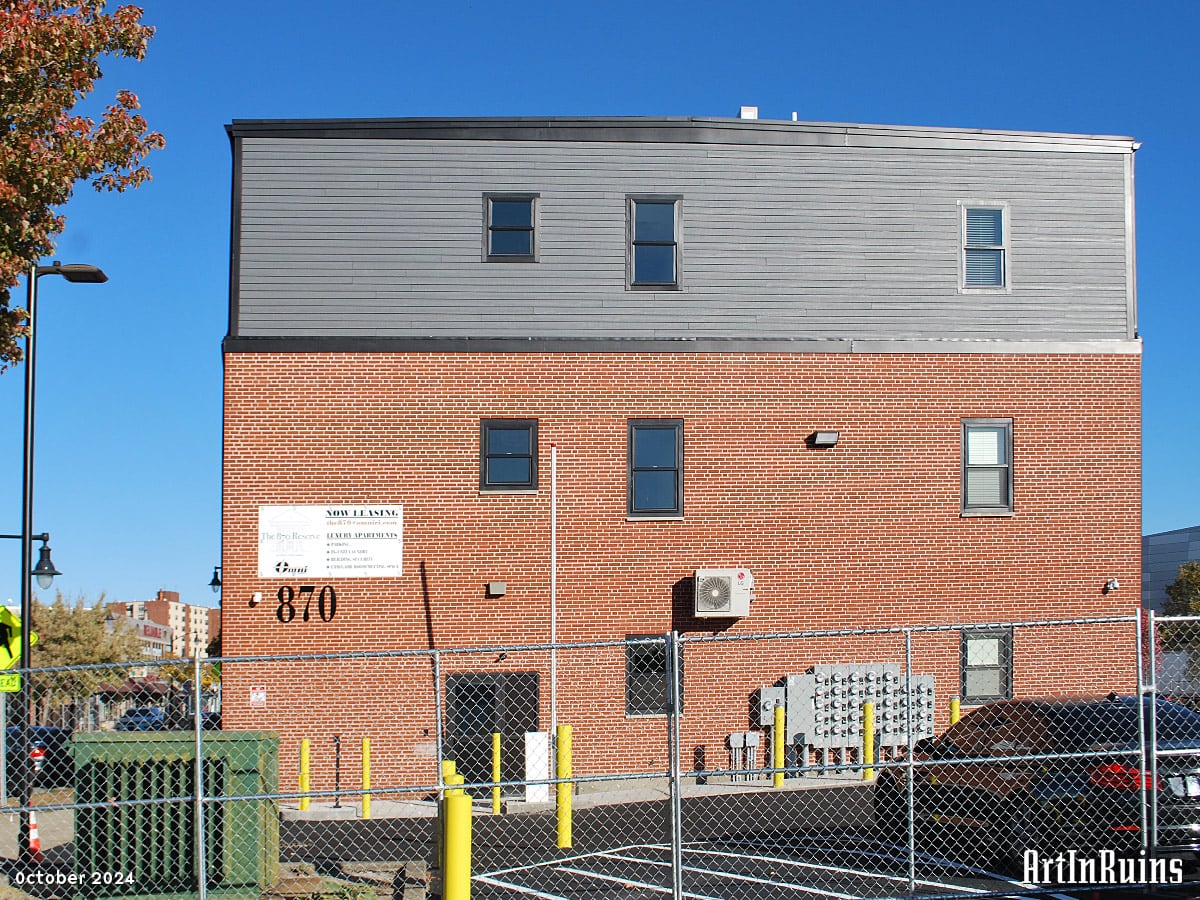
The bank conversion plans were altered, but slightly. In December 2021, the city cleared design barriers for a residential and commercial reuse of the 50,000-square-foot bank property, with 19 units in the main building.7 By April 2022 the plan had grown to include a third-story addition on the annex, and the staff report counted 51 units across both buildings.8
Our Take
This location has always been significant. Through its history, it has been a place to gather, conduct business, and meet with the community. The community asked for more when the first idea was not enough to carry the significance of the location. Hopefully, the ground floor retail will eventually fulfill the community gathering aspect of its history.
The bank built a monument to itself and to commerce. For almost 100 years, that was the significance of the location. Capitalism, industry, and progress. But human-made institutions do not carry on forever, and the era of banking institutions as significant architectural monuments is long past.
Its new chapter as housing continues historical threads from when it was a tavern and hotel. The simple clapboard building gave way to a more robust and elaborate building. The building will continue in its new life, and the corner got a more thoughtful design and residential application.
Current Events
The building now operates as The 870 Reserve. All of the typical apartment listing sites have information about availability.
History
This building and site are not located in a historic district, nor is it individually listed. But we compiled a story about these places from various second-hand sources:
In the early 1700s, Westminster Street began as High Street and before that, followed the path of Plainfield Road. It connected the Providence river with Plainfield, Connecticut. (High Street did not cross the Providence river into downtown Providence in the earliest days.) Cranston Street was the Moshanticut Road and branched off High Street. By 1739, a blacksmith by trade, Obadiah Brown started a tavern at the junction of High and Cranston Streets, and a small collection of commercial structures and homes started around it.
This tavern “was frequented by cattle drovers and farmers” as well as by “jovial parties of young men and women who had to go far around in the country in their excursions to wind up in a dance and a good time.” The tavern was known for fifty years as Martha Bloom’s and another century as Hoyle’s Tavern, after Joseph Hoyle who bought it in 1783.9 Mr. Hoyle sold to Mary Arnold in 1801. After marrying Tristam Burgess, the tavern remained in the Burgess family until 1888.10
In June 1781, the comte de Rochambeau’s French army left Providence to join Washington, a campaign that ended at Yorktown. The troops marched down Cranston Street from the Dexter Training ground past the Hoyle Tavern.11
In the maps from 1889 and 1899, the square is labelled “Burgess Square.” Though the square was shortly named for the Burgess family, the building continued its use of the Hoyle name, as evidenced by the historic photos. At the end of its life, it was as much a hotel as a tavern, serving all walks of life. The area slowly grew. Deacon Ebenezer Knight opened a store across High Street to supply the farms to the north and west, and by 1779 the Assessor’s Tax List counted eight houses at Hoyle Square.12
In the 19th century the junction turned commercial. The High Street Bank opened in 1828, backed by mill owner and future governor Amasa Sprague and by local merchants Duty Greene and Robert Knight.13 Streetcars arrived in 1865 when the Union Railroad Company, organized largely by the Spragues, ran its first horsecar line out Westminster Street to Olneyville.14
In 1888, a carved stone memorial was erected at Sachem’s Glen in the North Burial Ground (off North Main Street on the East Side of Providence). The stone read simply “Canonicus” alongside a bow and arrow insignia after the chief of the local Narragansett tribe who gave Roger Williams refuge. This will come into play later in the Hoyle Square story.
The tavern was razed in 1890 and a block of iron-clad commercial buildings replaced it. In the early 20th century the site held mostly two- and three-story wood-frame buildings: a bakery, a blacksmith, printing shops, and a bicycle repair shop. Further west from the square, the successful What Cheer Steam Laundry founded by the Hathaway Brothers was operating.
This formidable trapezoidal structure did not last long, however. Within three decades of its construction, the site was selected for a new monument to industry. In 1921, a new Citizens Savings Bank branch chose Clarke & Howe to design a temple-front Georgian Revival building. The style made a statement: a columned, cupola-topped bank in the Colonial Revival manner promised permanence and civic dignity, and the gable roof behind the cupola nodded to the colonial-style Hoyle Tavern. It was also a homecoming, since Citizen’s Bank counted the 1828 High Street Bank as an ancestor.14
The bank wanted the corner’s name, too. In 1921 it asked the city to rename Hoyle Square “Citizens Square,” but the City Council denied the request.15 Note that the former name was Hoyle Square, which we presume was already a recent renaming from Burgess Square as documented in the 1899 and 1921 maps. A 1926 G.M. Hopkins Map shows the name “Canonicus Square” and the 1976 RIHPHC survey used that name exclusively. Therefore the name lasted about 50 years. At some point, the stone was moved from the North Burial Ground and was placed in the road’s median until the 1990s.
Mid-century highway construction and urban renewal drastically changed the square and surrounding neighborhood. About a third of the West Side’s population left for the suburbs after the early 1950s. Commercial neighbors were replaced with civic education in the form of Central High School and later, Classical High School. The 1976 survey treated Hoyle Square as a key focal point for the neighborhood and recommended marking the tavern site.
With the loss of the banking anchor in 2019, the square — and the 1920s building — are poised for a different life of residence, education, and some commerce as well.
From “Providence: A Citywide Survey of Historic Resources,” prepared by the RIHPHC, 1986
[… Page 13] Until the 1820s, Federal Hill was mostly vacant land used for grazing cattle. Westminster Street was part of the 1714 road from Providence to Plainfield, Connecticut. In 1739, a tavern was built at the intersection of Westminster and Cranston Streets, and by 1783, when Joseph Hoyle bought the property, eight houses stood nearby; none survives. At wells Avenue was laid out from Aborn Street to the Woonasquatucket River in 1809 and extended to Manton Avenue as the Woonasquatucket Turnpike in 1810. […]
[Page 37] In 1739, Obadiah Brown established a tavern in Hoyle Square at the intersection of Cranston and Westminster Streets. By 1783, a hamlet comprising eight houses near the tavern represented the area’s most intensive development. […]
[Page 38] Urbanization of the West End spread westward from the early settlement at Hoyle Square, along Westminster Street and — to a lesser degree — along Cranston Street. By the mid-1820s several houses stood on Westminster Street between Downtown and Olneyville, including those at 1208 and 1228. Ebenezer Knight Dexter gave this incipient neighborhood a civic focus in 1824 when he left his farm to the city for use as a military training field. By mid-century, urban development had begun to fill the neighborhood with houses almost to Dexter Parade. […]
[Page 241] Citizen’s Bank (1921): Clarke & Howe, architects. A handsome, brick-faced, 2-story Georgian Revival structure with a trapezoidal plan to fit the site, pedimented tetra style portico on the facade, and a cross-gable roof with cupola. Citizen’s Savings Bank was established in 1871 and was first located nearby at 846 Westminster Street. This building stands on the site of the renowned Hoyle Tavern, built by Obadiah Brown in 1739 and acquired by Joseph Hoyle in 1783. The tavern remained in active use until its demolition in 1890.
In the News
The Hoyle, One of the City’s Old Landmarks
| Providence Evening Bulletin | January 19, 1888 (abridged) |
Formerly the Chief Hotel of the City and State
If you ask anyone the location of a place above Winter Street on High or Cranston it is nine chances our of ten that the answer will be “it is just beyond the Hoyle,” or “you go as far a the Hoyle and then turn,” or some such answer as that. In fact, the Hoyle Tavern, Hoyle Hotel, or The Hoyle, as it is widely known, is the best known landmark on the west side of the river, and is not only well known in Providence, but all over the State.
For more than a century and a half, as it is claimed, it has stood where the two roads, leading to Olneyville and Cranston, meet, the headquarters for those in town as well as out. Its history, as well as can be learned, is as follows:
The house, so a photograph hanging in the sitting room states, was built in 1724, but this probably is a mistake, for there is no record of it earlier that 1782, when it was opened by its builder, for whom it is named. Mr. Hoyle also built and maintained a hotel known as the “Hoyle” in Triptown, but it has no history like the original Hoyle here. From its earliest birth until within a few years it was a hostelry for man and beast, especially man, and was open about twenty-four hours a day and 365 days in a year, except leap year, when it was open 366. Not is is used as a lodging house for families, and the rooms are let to boarders, who take their meals elsewhere. The famous old kitchen is deserted and silent, no juicy steaks are cooked there, no steaming coffee emerges from its portals, and the famous dishes of ham and eggs and wonderful boiled dinners that used to be served there are no more known.
With the increase in population and the growth of buildings on the West Side, its functions ceased and gradually but surely it settled into a relic of the past, its glory faded and “The Hoyle” sank to the level of an ordinary building, only known by the fact that it stood at the junction of High and Cranston streets.
The hotel or tavern, as it is and was better known, was formerly two stories high, but a half century after it was built was raised one story, and now has forty-five rooms, twelve of them being new. It also has an annex or ell, which formerly contained a barroom on the lower floor, but now instead of containing first-class liquors, as formerly, it contains second-hand furniture. This annex was built on within the last ten or twelve years, and is in odd contrast to the old house, the lines of the former being wavy and anything but straight, while the new part is angular and square, with modern windows and modern rooms.
Perhaps no tavern of olden times or hotel of later years has so many stories connected with it, and to get one of the old timers started talking about the Hoyle is to bring out a string of stories that hang together like the Arabian Nights tales. […] He recalled the times when the Hoyle was the leading road house of the town. Then the bloods of the East Side used to drive out to it, for in those days there were but few buildings on the hill and it was considered quite a distance from the centre of the city. There was no bridge across the no Providence river and to reach “The Hoyle” necessitated quite a drive out toward Pawtucket and then across the river and out through the streets no so busy with trade and peopled with thousands. […]
The same old sign still stands over the door, regilded, changed in form and often painted anew, but it is the Hoyle Tavern to-day as it was a hundred or more years ago, and, upon entering it almost seems as if one was taken back for a century. the main stairway is quaint and queer, in its formation, the balustrade, or bannisters, as it was then and is now generally called, is of the straight, ugly style, the stairs narrow and of low tread, and great care has to be exercised in going up alone for fear of hitting one’s head on some of the supposed artistic projections or adornments. As one looked at it, the question naturally comes up as to how many thousands have climbed these stairs, how many joyous supper parties have passed up and down, how many honest farmers have rested there after a busy day of barter and trade in the city, and how many, who, in the barroom below, have drank not wisely but too well, have been aided up the steep way by the attendant of the house? Could these stairs speak, what stories they could tell: but unfortunately they could not speak and so could not be interviewed to gain their tales. […] Who the architect was that planned this floor is unknown, and apparently it was not planned at all, but the rooms were simply thrown at the building and stuck. […]
One of the legends of the Hoyle is that “Nick” Gordon, the instigator of the murder of Amasa Sprague, the elder, came to the tavern the night of the murder and bought drinks for the crowd several times, and kept talking about what time it was, and how long he had ben there, thus laying a foundation for an alibi in case he was suspected of the murder. […] Fun ran fast and furious all night long, and it was no wonder that the next day there were but few of those who had passed through the ordeal had any adequate idea of what time “Nick” entered or left the place. […]
— Providence Journal, 29 Jan. 1888, p. 10. NewsBank: America’s News – Historical and Current. Accessed 19 Oct. 2026.
-
Gogosz, Alex. “Historic Citizens Bank building to be redeveloped into apartments.” Boston Globe, December 14, 2021. Captured 11 October 2026 from https://www.bostonglobe.com/2021/12/14/metro/historic-citizens-bank-building-be-redeveloped-into-apartments/ ↩
-
Mr. Brussat’s blog post includes site plans and images from another developer interested in the location. Brussat, David. “Canonicus Square betrayed?” Architecture Here and There, March 22, 2020. Captured 11 October 2026 from https://architecturehereandthere.com/2020/03/22/canonicus-square-betrayed/ and archived at https://web.archive.org/web/20260107163753/https://architecturehereandthere.com/2020/03/22/canonicus-square-betrayed/ ↩
-
Providence Preservation Society. “West End Gateway Design Competition.” April 6, 2020. Captured 11 October 2026 from https://ppsri.org/west-end-gateway-design-competition/ ↩
-
Providence Preservation Society. “Design Competition Winners Announced.” June 15, 2020. Captured 11 October 2026 from https://ppsri.org/design-competition-winners-announced/ ↩
-
Ibid. ↩
-
Polites, Taylor. “Canonicus Square.” Rhode Tour. Captured 11 October 2026 from https://rhodetour.org/items/show/175 ↩
-
“Historic Citizens Bank building to be redeveloped into apartments.” ↩
-
City of Providence, City Plan Commission. Case No. 22-015 MI, 870 Westminster Street. Staff report, April 12, 2022. Captured 11 October 2026 from https://www.providenceri.gov/wp-content/uploads/2022/04/22-015MI-870-Westminster-St-w-staff-report.pdf ↩
-
“The West Side, Providence.” Rhode Island Historical Preservation Commission, 1976. Page 6, quoting an unnamed source. ↩
-
Ibid. Page 60. ↩
-
Polites, Taylor M. “Canonicus Square.” Rhode Tour. Accessed 09 October 2026 from https://rhodetour.org/items/show/175 ↩
-
“The West Side, Providence.” Page 6. ↩
-
Polites, Taylor M. “1828: High Street Bank.” Rhode Tour. Accessed 09 October 2026 from https://rhodetour.org/items/show/368 ↩
-
Brussat, David. “Canonicus Square betrayed?” Architecture Here and There, March 22, 2020. Accessed 10 October 2026 from https://architecturehereandthere.com/2020/03/22/canonicus-square-betrayed/ ↩